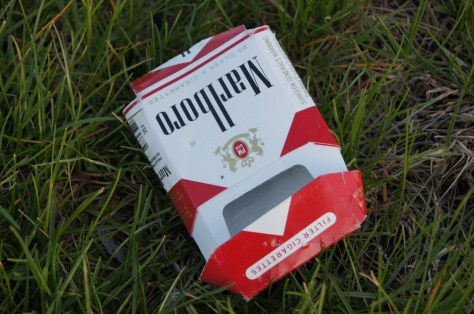
As if it wasn’t bad enough that Marlboro makes a product that literally gives you cancer, the left over butts litter the ground like delightful, carcinogenic confetti. (which would make a great band name). However, the cigarettes leftovers themselves are easy to ignore compared to the easily toss-able packages they come in. This was found about 50 feet from a dustbin, btw.
Before I continue writing about the individuals and organizations I’m making connections with in India to further my understanding of SWM practices, I had mentioned earlier my visit to the Lancaster Co. Waste-to-Energy plant (W2E) and I’d like to write down my experience and impressions from that visit.
Lancaster’s W2E plant is owned by LCSWMA but was built and continues to be managed by Covanta Energy – a company that specializes in W2E solutions. They are currently operating facilities all over the world. The plant in Lancaster County takes mixed waste, runs it through an incinerator and uses the resulting steam to power a generator which provided electricity to over 20,000 Lancaster home in 2014. Ferrous and precious metals are separated from the resulting ash and transported to a recycling facility in York, PA. Ash is then taken from the facility to the Frey Farm Landfill where it is used as cover at the end of each day as required by law.
Our tour began with an explanation of the incineration process from initial dumping at the site through to the exhaust stack. They had a scale model that we could look at which was very useful for a visual person like me.
There were two things I was most interested in – How they dealt with toxic byproducts from burning, and how they kept ash from becoming airborne and polluting the surrounding the community; these being two factors that have shut down all but one mixed waste incinerator in India.
An engineer from Covanta explained that the resulting furans and dioxins (toxic substances) from the burning are treated with other elements and substances like ammonia, which result in a chemical reaction that neutralizes them. After this, they are still run through a series of filters before being expelled through the smoke stack. According to the chief engineer this particular site functions well below the recommended limit for toxins set by the EPA.
After this introduction we were taken through the site to see what there was to see. Which, due to the nature of the facility, wasn’t much. Most of the machinery is enclosed. We did get to see the enormous claw and crane that moves the raw trash from the dumping station to the three operating chutes that run to the incinerators. We were taken to the control room, which looked like a scene from some old B-SciFi movie. (Walls covered in blinking lights and computer screens measuring things I didn’t understand but sure looked important 😉 )
We then went to the tail end of the process in a large warehouse and watched as ash fell from a mechanical belt to piles on the ground where they would be picked up by trucks at the end of the day and transported to the landfill. It was a rainy day outside but I was still struck by the fact that we needed no face masks to walk around the sight or in any of the buildings (Although ear plugs were necessary for noise levels). I expected more particulate in the air. I asked our engineer about this. He explained that the ash was kept at 20% moisture at all times — treated throughout the process with steam and water. I then asked if the ash ever got into the air in large quantities. He said absolutely, but very rarely and they take great pains to make sure it doesn’t happen. If it does they make sure the communities that would be most affected are informed.
This was, in a way, an answer to a question I had had about the incinerators in India. Their chief problem was that they expelled so much ash into the air that it created a thin layer that covered everything within a certain radius of the plants. So either they didn’t treat their ash with moisture, didn’t have appropriate filtering practices or both.
He then discussed the issue of cost of running the facility. W2E plants are very popular but there are relatively few in the US to serve the number of communities in need. The reason being is that the cost of initially building such a facility is quite high and it can take a long time to recoup the costs. Certainly if cost is an issue with the US, it would be even more so in India. However, there is definitely a need in India for such facilities and certainly enough waste to see a profitable market for a company willing to take the initial risk.
I can see how the W2E plant could be an important piece of an integrated waste management system, though much like the Frey Farm Landfill, a dedicated management staff, as well as meticulous attention to regulations (that can often be costly to follow) is absolutely necessary. A poorly managed incinerator is going to create more pollution problems than it solves. Run correctly, the benefits are enormous.
My intention now is to do more reading on Covanta and then contact them to ask if they have any operations in India or any plans to, and if not, ask why.
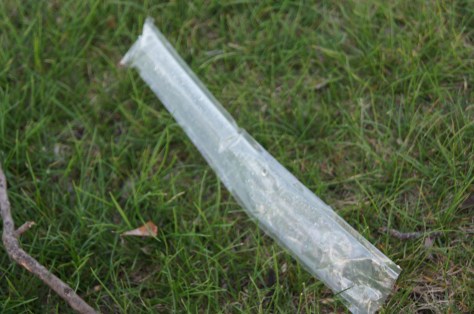
You know summer is on its way when you see these floating around. I used to love these “stick pops” as a kid. Tongue staining goodness. I can’t recall a single flavor, but my favorite was “red”. Enjoy responsibly, kids – throw out the packaging.
A few days ago I had the pleasure of speaking with a gentleman named Satish about his NGO, ‘Bunch of Fools’. Right from the outset, the name alone implies a wonderful optimism that appeals to me. Certainly, despite the challenges his organization faces, Satish sounds like there are plenty of reasons to be optimistic about waste management in India.
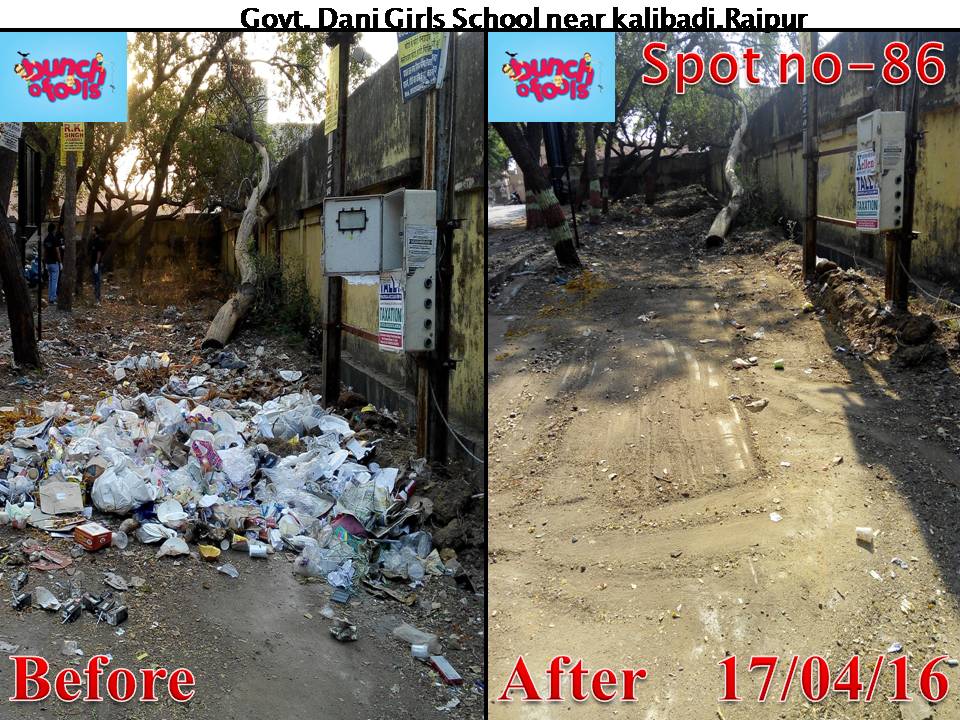
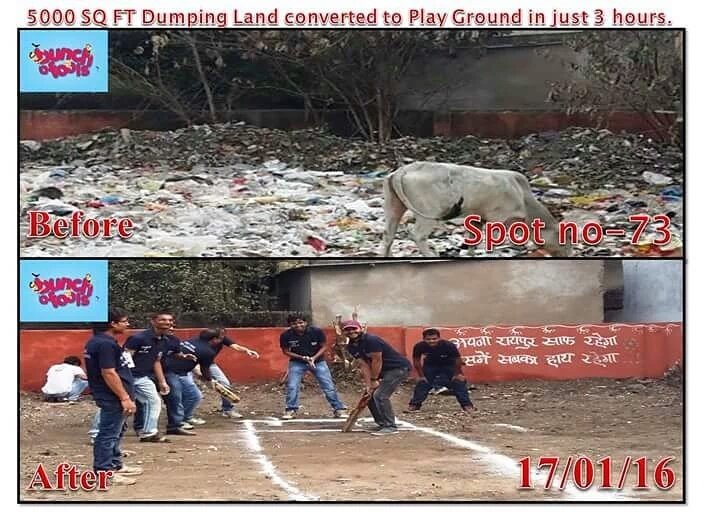
This group of about 100 regular volunteers takes to the streets of Raipur in order to tackle litter, informal dumping grounds as well as to beautify run down and unloved walls and curbs.
Don’t let the informal nature of the work fool you (pun intended), these ‘Fools’ are highly organized with different teams in charge of various activities such as street cleaning, painting, R&D, education and public relations.
In addition to that, probably the most important work the group does involves educating locals about the importance of cleanliness in their community. They organize a street team each Sunday to speak to people directly about their concerns, answer questions and in general get a sense of how people feel about their activities.
Satish says the reaction from both locals and officials has been overwhelming positive, and that while a few cynics still think they are crazy for even bothering to try, the majority of people stand behind their efforts. While municipal officials are supportive and offer help in the form of trash pick up, trucks and other equipment, they are limited by a lack of resources and infrastructure (More on that below) This is in contrast to most of my reading which suggested that NGOs and CBOs are constantly playing tug-of-war with municipal authorities in order to get financial and other support. This cooperative relationship could be particular to Raipur, or perhaps it is a problem in larger cities.
Satish claims that a dramatic shift in mentality has occurred in the minds of Indians over the last year and half to two years. I asked what the source of this change was, in his opinion.
PM Narendra Modi’s Swachh Bharat Abhiyaan (Clean India Campaign) has inspired people to take control of the sanitation and waste in India. By connecting with the hearts of the people, Modi has encouraged people to take an active role in improving their country.
When I asked about the biggest challenges India faces in terms of waste management, Satish’s answer was immediate, – Lack of Awareness and Infrastructure. His answer was reaffirming of what I have been reading,particularly in regards to Awareness. Without education, there is apathy, and if there is apathy, there is no change. It’s not enough to form many small, dedicated groups who clean their cities each day – they must engage the public in a dialogue about what solutions they want to see as well has how to get there, based on scientific knowledge of the negative effects of leaving things as they are, and the benefits to the every day person if he puts in just a little effort. Even if one cannot spare personal time to contribute to the cleanliness of a nation, just knowing the benefits and being educated will allow people to make more informed choices about who they support politically, so they can demand changes on a governmental level.
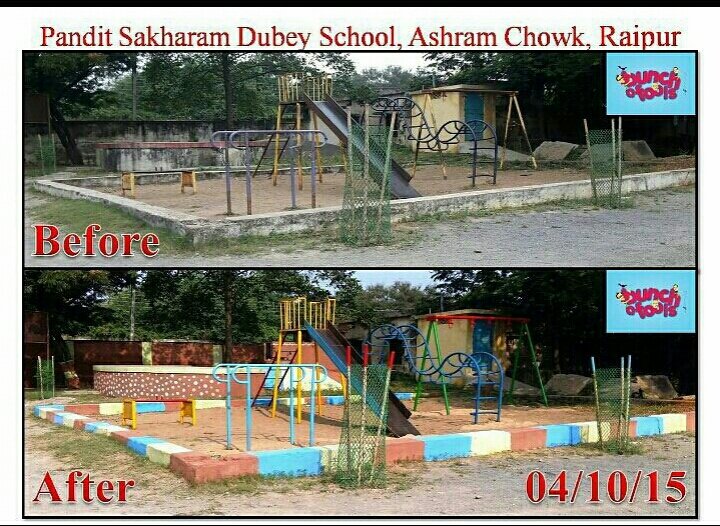
One particular aspect of the ‘Fool’s’ work I appreciate as an artist is the act of painting the spaces they clean so that they look more attractive. I think it transforms a mundane bus station that’s easy to take for granted and dump garbage in, and turns it into a place worth caring for, if for nothing else than to continue to be able to enjoy the space.
Which brings me to another positive outcome of this kind of work. “Space Management”. Locations that were once used as dumping grounds, are transformed into playgrounds and parking spaces. Spaces once useless for anything utilitarian or recreational suddenly have new potential. Now everyone can enjoy a place that was once avoided for its smell and disease.
Also, notice that cow up there in the photo? Another benefit of keeping mixed garbage off the streets is it improves the lives of animals such as cows and dogs that go digging through the rubbish for food. 50 years ago, when most of the waste on the street was organic, this wouldn’t have been a problem, but now metal, broken glass and plastic are mixed in and this ends up in the stomachs of these animals and eventually kills them.
What seems to make ‘Bunch of Fools’ successful is their community education efforts which have lead to an almost unanimous support of the work they do. As awareness improves one hopes that policy changes will come, supported and called for by the locals themselves who have seen a glimpse of what a Clean India could be and can now visualize the bigger picture.
At the conclusion of the interview, Satish graciously offered to put me in contact with local authorities in Raipur during my visit in September and encouraged me to contact as many officials as I could. He also provided me with more R&D related information which is very useful for understanding the technical side of things. I will be spending time with the ‘Fools’ in India to better understand their challenges and victories as well as spend a few days hopefully helping them with a few of their cleaning campaigns. I’ll be there for Mahatma Gandhi’s birthday as well as the Swachh Bharat 2 year Anniversary, which I think is very fitting for my work.
If you would like to learn more about “Bunch of Fools” you can visit them at the website below:
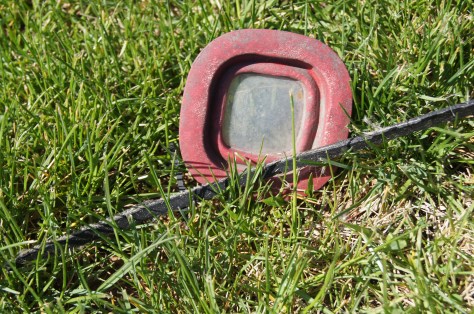
All it takes is one piece of litter to remind you that it’s not just things you would expect that end up thrown away improperly. Sometimes perfectly useful items end up on the side of the road. It’s a reminder that much of the burden of waste comes from over consuming and discarding too soon. This is a dirty Tupperware lid I found on my walk. I must have missed it several times because it looks like it’s been in the dirt for a while. It came with a bonus piece of mystery rubber.
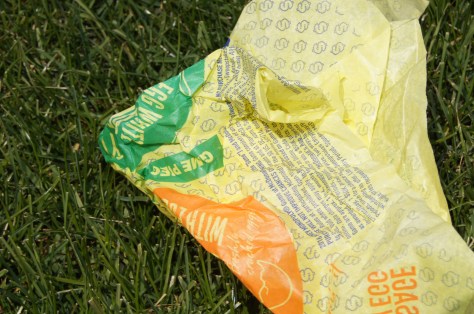
You don’t have to travel far to find trash from a major fast-food chain. This was the piece I photographed, but about 50 feet up the road I found the rest of the discarded meal- paper bag, fry container and napkins. I’d like to think that most people don’t just toss this kind of thing out the window. I imagine a lot of trash ends up on the ground because people don’t cover their trash bins or close community dumpsters. Then again, the proliferation of trash along highways would suggest if given the chance, people will be lazy.
Today I filed paperwork with the state of Pennsylvania to register as an official charity organization. I did this for a few reasons. One, the state of PA has specific laws governing individuals or organizations that solicit donations from residents and businesses. Technically, the relatively small amount I need to raise exempts me from the requirement to register, however, after giving it some thought, I wanted to instill more confidence in my supporters by having an official registration number.
So, as of today’s filing my charity, ‘Dirty Hands, Clean Heart’ is registered and I can begin door-to-door fundraising activities.
To learn more about my fundraising needs, you can visit my GoFundMe page directly here.
This past week I visited 2 of the 4 SWM facilities within my own county. LCSWMA (Lancaster County Solid Waste Management Authority) handles landfilling, recycling and waste-to-energy services for two PA counties (about 800,000 people in 2014). This past week I visited the Frey Farm Landfill as well as their Waste-to-Energy Plant.
My goal was to better understand how these kinds of facilities are operated, the pros and cons of certain approaches, and also see if there was anything I could learn from how these sites are managed that can help me better understand the challenges faced in India. I’ll describe my experiences at both sites in separate posts and then explore what might and might not work for similar facilities in India.
The Frey Farm Landfill
The Frey Farm Landfill is located about 20 minutes from downtown Lancaster in scenic farmland. As I approached the landfill I saw only a large green hill in the distance. The stereotypical images we have in our minds of what a landfill is “supposed” to look like didn’t apply here. I parked at the visitors center and waited for my guide. Another unexpected thing I noticed. There was almost zero foul odor in the air. Frankly, I wouldn’t have complained about it if there had been, since, again, I was expecting it. But on that sunny, clear day, I could have been standing in any rural neighborhood in Lancaster.
My guide Allison was kind enough to take me around (I was the only person signed up for the tour that day). We drove around the massive landfill as she explained the LCSWMA philosophy, history, environmental and safety practices, as well as what they call their “Integrated System” which allows them to provide energy, divert waste away from the landfill, and keep toxic pollutants out of the water, air and soil. Things I was impressed with:
Waste-to-Energy solutions: Methane from the decomposition of waste at the landfill is siphoned off to a combustion generator to provide a source of electricity. This keeps it out of the air, reducing greenhouse gasses. Treated steam produced from the sites operations is piped to a local business and used in their sanitation process. 2 wind energy turbines are installed near the top of the landfill.
Attention to environmental safety: Extra care is taken to make sure trash that blows from the landfill doesn’t burden the local people or wildlife. Large nets are placed along the perimeter to catch trash, and a small staff periodically treks 1 mile in each direction around the site to pick up any litter that may have escaped. The site is inspected randomly each month by the EPA. Ground water from the site is tested as well, to make sure no heavy metals or other toxins are leaking through the protective barrier underneath the landfill.
Financial Sustainability: I was surprised by the fact that though the LCSWMA is a government run operation, it utilizes NO tax revenue. They maintain the site and the pay of their employees by the sale of electricity from their WTE solutions to local utilities as well as the fees for dumping at the site. This is particularly important to my research for India as lack of funds is sited as one of the largest barriers to many of the SWM solutions that have been tried or proposed in the past. If it’s possible to run a site like this without taxing an already poor population, while at the same time providing energy to businesses and homes, this may still be an option for India in some capacity.
Efficiency: Remember that lack of odor I noticed from the landfill? Allison explained that most of the site is used to dump construction materials and other non-organic/non-food based waste. Between recycling and their WTE plant, they manage to divert 98% of the SW away from the landfill entirely. This has extended the life of the landfill and lead to more sanitary conditions at the site as a whole. Without organic waste, wildlife largely stays away from the site (aside from a few birds I saw) and the odor is reduced. Also between the 4 sites, there are only about 100 employees, another stat that surprised me.
Community Engagement: LCSWMA goes to a great deal of effort to educate the local population about their operations, through providing free tours, educational materials and visiting schools and universities. This community engagement is particularly interesting to me because I see it as an area I could help improve when I continue my research in India in September.I don’t have pictures of either site to show you (I was permitted to take pictures) because honestly, there isn’t much to show that would be very descriptive of my experience there. What was far more useful to me was having someone to answer my questions.
In addition to my tour, Allison provided me with a lot of useful resource information to help me further my personal quest.
Lessons for India:
I think one big caveat to note is that between cities in India and Lancaster county there is a HUGE population difference. Hyderabad is home 3.6 million people – 3x the population of Lancaster and Dauphin County combined. I am not educated enough on the economics of scale to know whether an integrated system like this would function well under that kind of population density. Still, I find the Waste-to-Energy solutions at the landfill are worth exploring because India also has an energy crisis.
Another caveat is a cultural one: India has an informal waste management stream that doesn’t exist in the US. The nearly 4,000 rag pickers in Mumbai that make their living off the landfills would need to find another source of income, if the landfills were either suddenly more efficient, or properly covered at the end of each day (A US requirement by law. Uncertain of the laws in India regarding this). Many have said, give the waste-pickers jobs at theses new plants, but when 4 large facilities only require 100 employees, that is not a viable employment alternative for waste pickers. Any benefit from sites like these in India will be environmental and public health related. Job solutions remain elusive.
So the biggest take away for India would be the need for more environmental attention utilizing WTE technology such as the methane combustion method at Frey Farm Landfill and perhaps the wind energy generators depending on the site. Also, there is an incredible amount of monitoring and accountability at this site. I suspect the history of corruption (fueled by scarcity, in fairness) in this area in India will be a challenge to overcome, but it seems mitigated here in Lancaster by the fact that those in charge of the various roles sincerely care about the role they play and their responsibility to people and the environment. We need to find those people in India, and give them these important roles.
I feel fortunate to live in a county that has such an efficient WM system and what’s more I am happy they they are transparent enough to educate the public. Without access to formal education on the topic it’s a tremendous resource for me.
In my next post I’ll talk about LCSWMA’s Waste-to-Energy Plant.
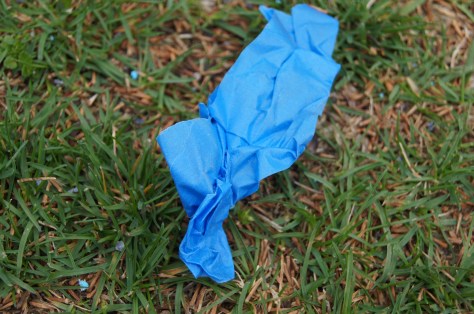
Considering the amount of home renovation going on in our neighborhood these days I’m actually impressed that this is the only stray evidence I’ve found outside the renovation site: a crumpled piece of blue painter’s tape.
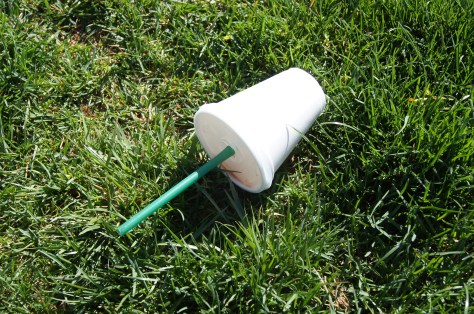
We’ve had some blustery wind that last few days and because of that, there’s always more litter billowing about. It escapes from trash cans or just journey’s on the wind from far away places. Today, (in addition to other things) I found this Styrofoam cup. From what I’ve read it can take at least 500 years for one of these babies to break down.
So this cup will still be around when the Zombie Apocalypse falls.


 dirtyhandscleanhearts.com