One of the more surprising consequences of the global Covid-19 pandemic has been the affect it’s had on environment. Specifically, how mass quarantines have cleared up the air and water in major urban centers around the world, as human activity retreats indoors. I’ve heard more than one friend or acquaintance speak with a voice full of hope that these dramatic changes will continue once people slowly return to their regularly scheduled program.
I wish I could share their optimism.
The problem is that people may have changed their routines, but they haven’t changed their habits or relationship with waste just because they’re stuck inside most of the time. Unless the pandemic also leads to a major mental shift, once the world re-opens, we’ll be facing the same collective problems we always have. No corporate responsibility for their role in the waste chain, people’s tendency to litter (especially in places with strong waste management infrastructure), and a general mentality that although shared space may be ours to use, it is somehow not our job to care for it and keep it clean.
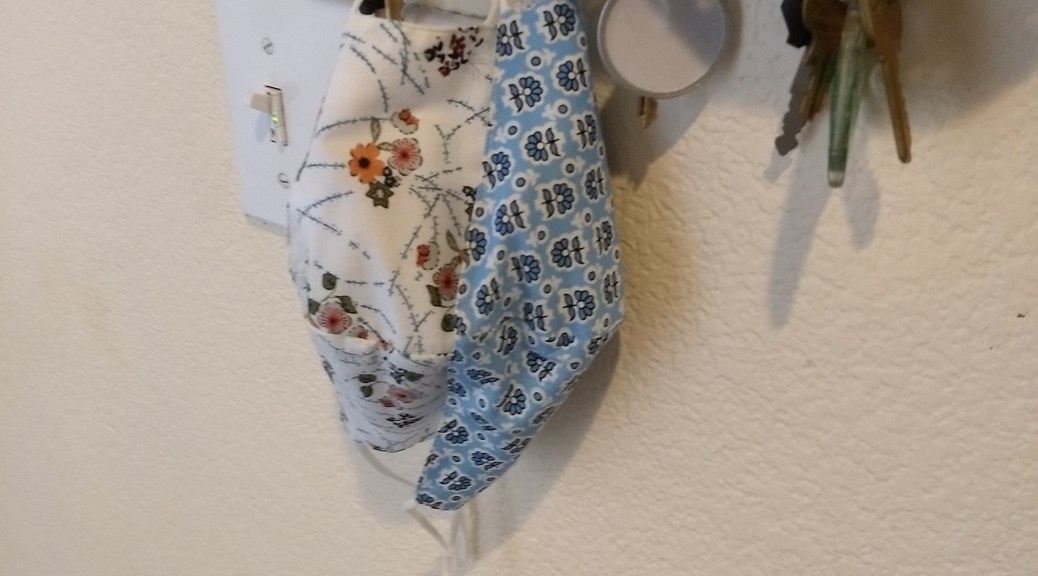
Case in point, the disposable mask. I was guilty of tearing through quite a few boxes of disposable masks in the beginning of the quarantine. I had my excuses: I was a new mom, exhausted and scared and I also assumed that the quarantines were temporary. Who needs a handmade, reusable mask for something that’s only going to last a few weeks right?
But those weeks stretched into months and here we are more than half way through 2020 and there’s no end in site. While I have several reusable masks now, I still think about those disposable masks all the time. Why?
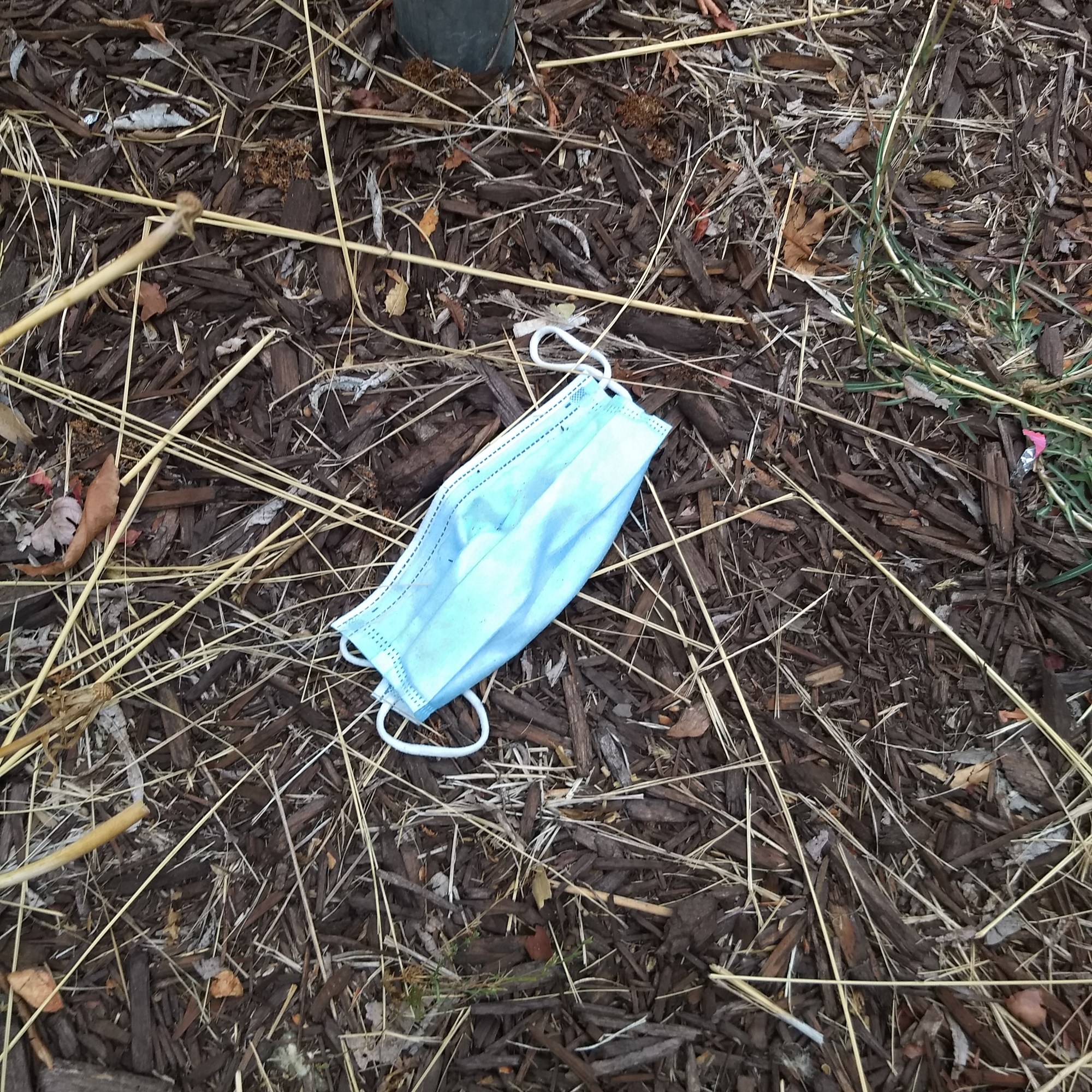
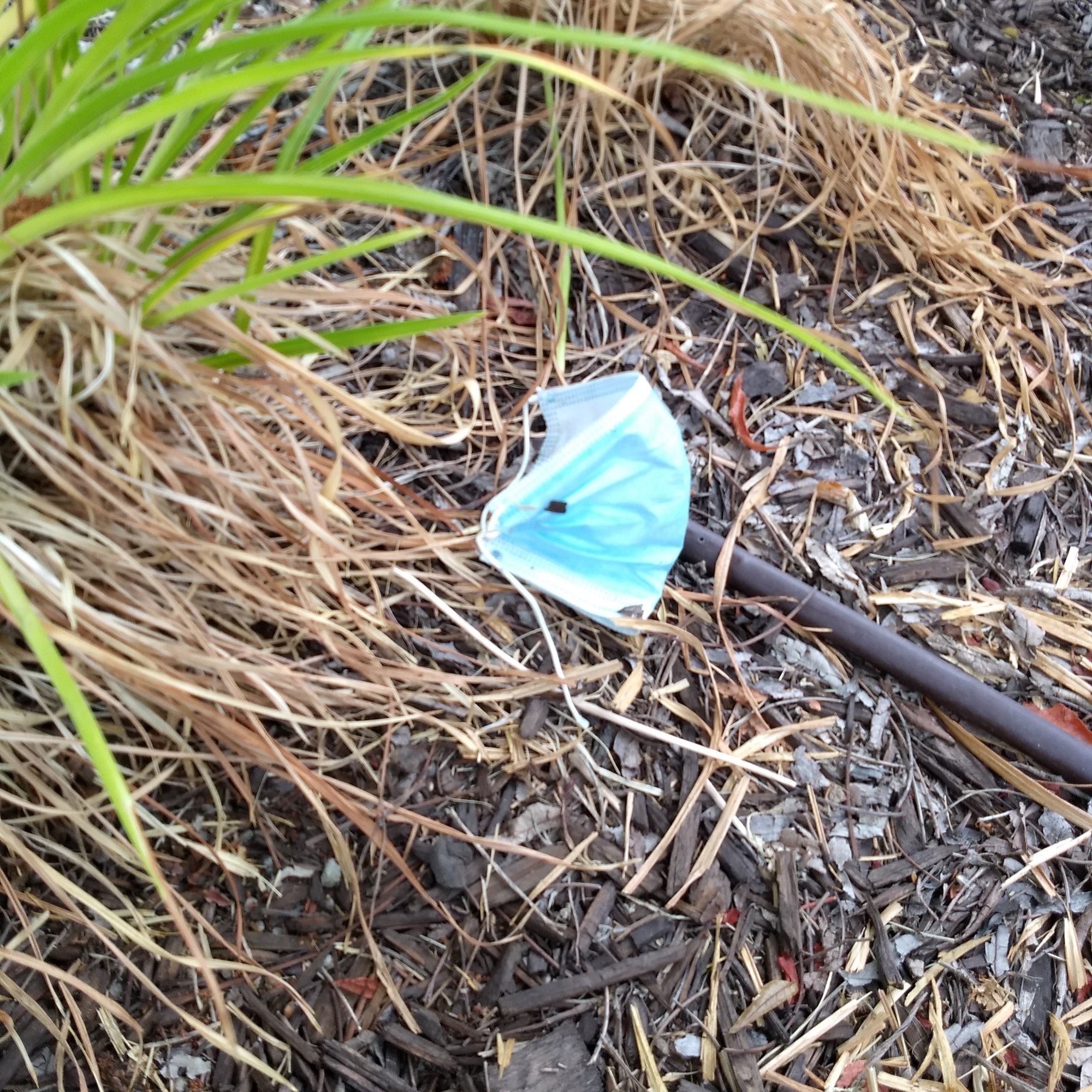
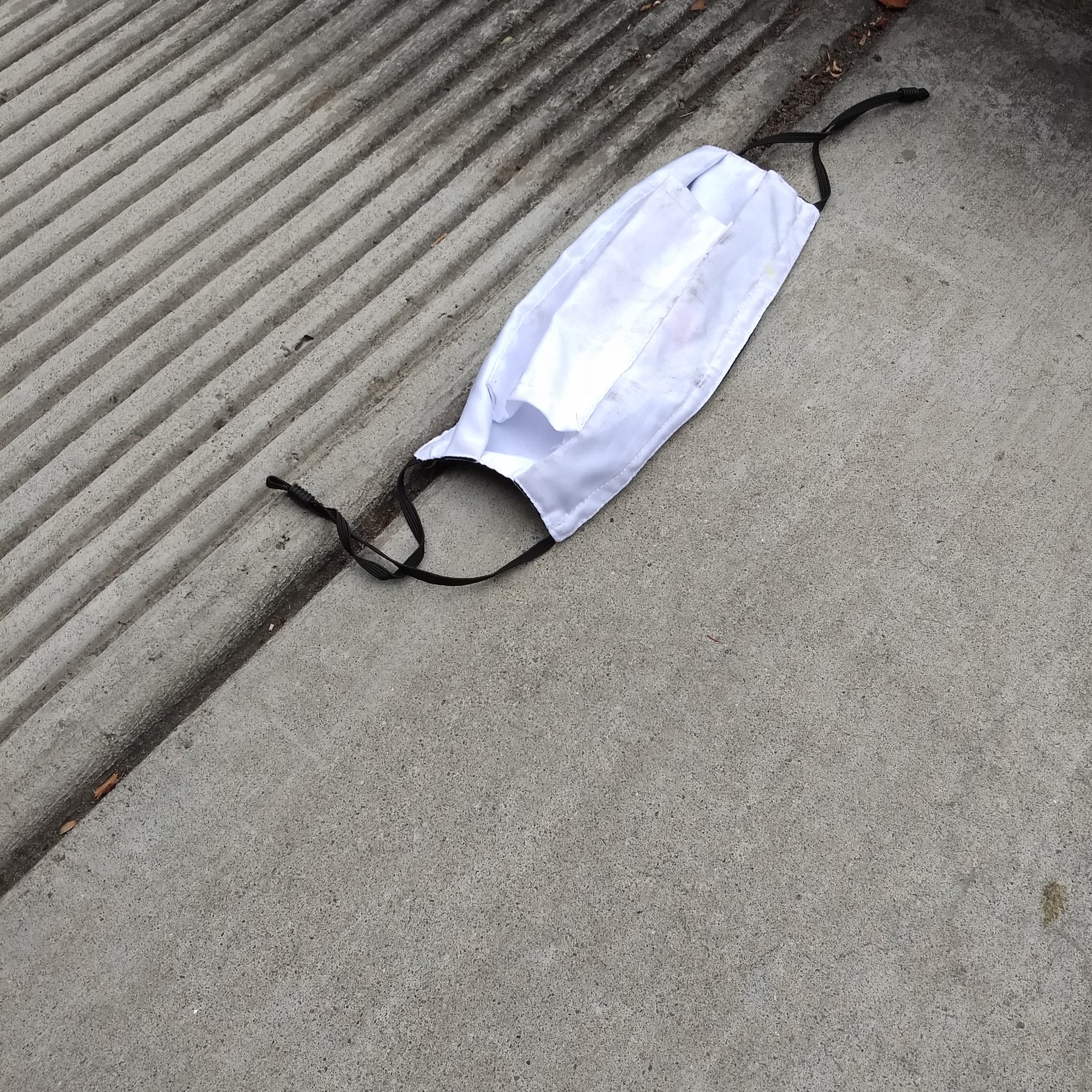
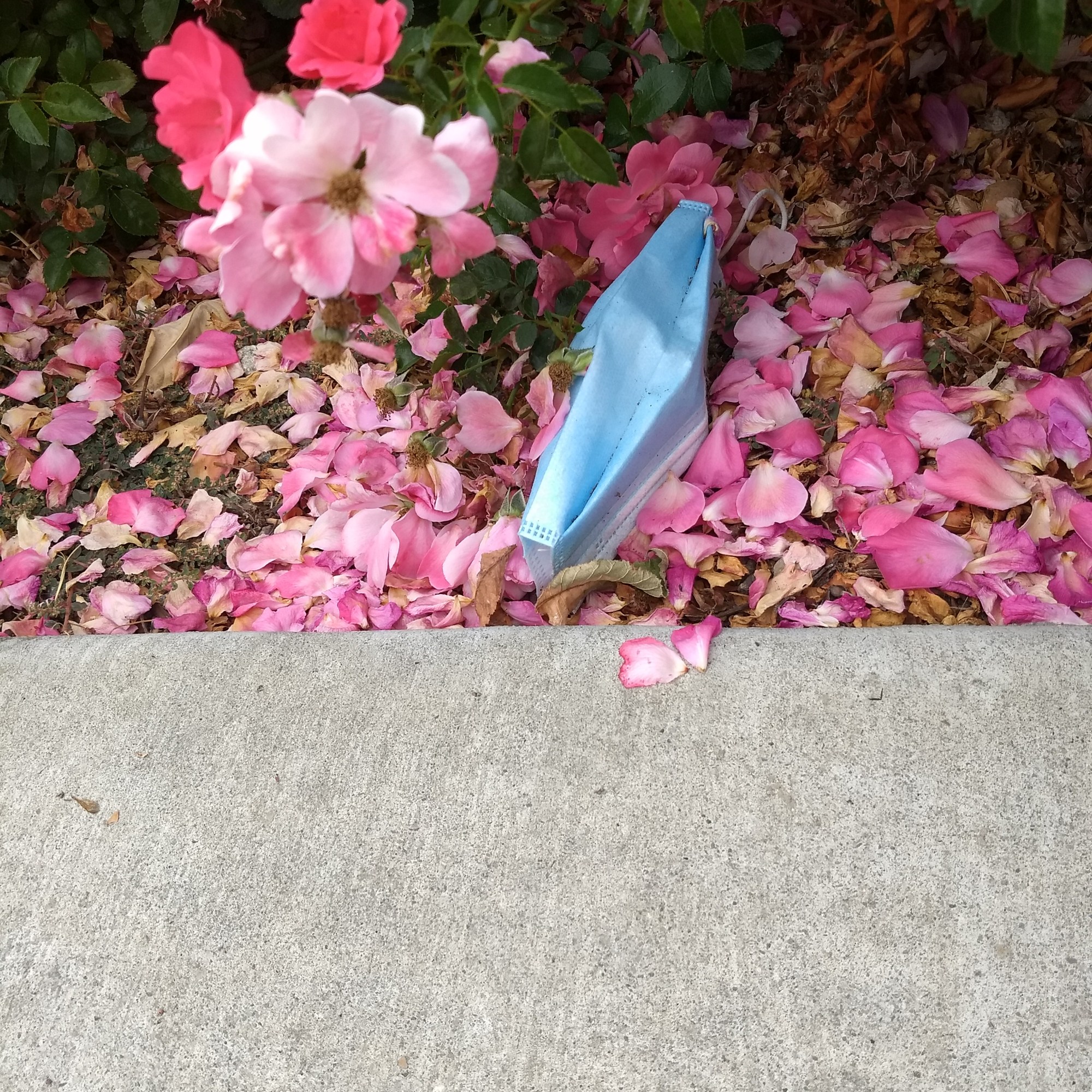
Because I see them on my daily walks around the neighborhood. Not on people’s faces or in a trash can, where they belong, but on the ground; another category of litter to add to the already endless assortment.
Masks are a particularly disappointing kind of litter because their very nature discourages passers-by from simply picking them up and tossing them in the nearest bin. The fear of infection means they stay where they are unless or until the local municipal cleaning crew can come by. I’m no different. The photos included in this article show masks from my daily walk and I confess that I did not have the courage to pick them up like I would other kinds of litter.
So, my obvious appeal in this article is to ask everyone to wear reusable, washable cloth masks, OR if you have to use a disposable mask, please dispose of it properly. Let there be one last thing we have to clean out of clogged gutters and storm drains.
With the global pandemic taking center stage in everyone’s minds these days it has taken me longer than I wanted to rebuild and revive the work associated with this blog. However while I continue to plug away, I wanted to leave a short list here of just a few of the organizations that are working tirelessly even as the pandemic rages, to keep the goal of a clean India alive while at the same time doing their utmost to prevent the spread of infections. I had the pleasure of meeting with organizers from many of these groups while in India several years ago and I have seen first hand their dedication and the fruits of their hard work. I encourage you to support them by sharing their stories.
It’s been almost 4 years since my pivotal trip to India. After about 8 months of research into waste management practices both here and abroad I made the trip and arranged to meet with individuals, leaders and organizations in person to learn and understand as much as possible about the waste management situation in India. While I had high hopes of turning this experience immediately into concrete actions to benefit the cause of a cleaner India, at the time my ambition was greater than my ability to organize my data and define the direction I wanted to take. That, coupled with other life changes saw me letting the project slip.
But it’s never left me alone completely. With the global pandemic causing a pause in the normal day to day routine of ordinary people, I have been given an unusual opportunity of time to revisit this project and become re-inspired by it. In 2016, I jumped in head first – which was good in one sense because I didn’t hesitate, but bad in that I did not give myself the time to get specific about my ultimate goals.
It’s now 2020 and while there will be no visits to India this year, there will be opportunity for brainstorming and revisiting my connections. I have a new set of homework to do in order to get to my goals, but this time I have specific goals in mind.
In the coming weeks I am reaching out to former contacts in India who are at the front lines of the waste management and pollution challenges in India and I will be working with them to figure out how best to help them achieve their organizations’ goals, whether that be financial, promotional, or other. I hope you’ll rejoin me on this journey. It may be a long one but I suspect it will be worth it. =)
It’s been five months since my last post. Due to the onset of a chronic illness I had to take a step away from not just my work on waste management in India, but also other work that is important to me. This was extremely difficult for me to do, but looking back it has been crucial not only to improving my health but also giving me time and space to rest and re-evaluate my priorities.
I had taken on far too many projects at once which inevitably lead to me being overwhelmed and unable to finish any of them. Luckily, with the support of my family, friends and a good deal of introspection, I have been able to gain some clarity.
Some more good news is that despite my inability to be as involved as I should have been, the waste separation program at my local temple continues thanks to the dedication of hard working members of the community that have picked up where I had to stop.
In addition, I am slowly starting to increase my involvement with that project again.
As for the art related work I had planned to do this summer related to waste management in India, I was able to finish one online editorial image which I posted on Facebook and my Twitter account and it was very well received by the waste management community network I am connected to. It gives me confidence I am on the right track and I am hoping to continue now that my health has improved.
My progress toward those socially aware artistic goals will come slower than I had initially planned but I am confident that they will be better for it. I have had to prioritize finishing other artistic and professional pursuits before taking on any further work so as to not spread myself too thin. In addition to the waste research I am also involved in several volunteer organizations which depend on me to be reliable and available.
A bit of exciting travel news to report now! I have been in contact with a group called Waste Warriors who work out of several places in Northern India but who are based in Dehradun, Uttarakhand. I have plans to visit India again in February of 2018 and hope to work with them for a time. Details are still in the works but I am hoping to gain valuable insight and experience from the tremendously important and difficult work they do keeping their corner of India clean. I’m hoping to learn about the unique waste challenges they address in their part of the country as well as learn more about how they manage the NGO and build an effective network of volunteers and funding.
While there will be no fund raising for this particular trip (I have already been helped so much by so many generous people) as always I encourage you contact me through the contact tab above if you have any resources, information or contacts to share that might help me as I prepare. While my focus for this visit will be Waste Warriors, if I have the ability and opportunity to connect with other individuals and organizations I will make every effort to do so.
Thank you to all my supporters and readers who have been patiently awaiting updates while I recover.
Since my return to the states I’ve had several supporters come forward offering to help spread the word about the work I am doing. From help with editing my project video (still in the works) to offers to have me speak in front of small communities about the importance of SWM, my goals seem to have really reached people.
This has inspired me to work with a few other individuals at the local Hindu Mandir in order to develop a recycling and composting scheme to benefit the community. After consulting with the temple management and kitchen volunteers we began our new program a few weeks before Ram Navami. Immediate responses from the community were enthusiastic, though some expressed understandable doubt that we could maintain such a program.
While indeed we have had set backs and challenges, everyone who is organizing the program is deeply committed to getting it to work. In India I witnessed many examples of people’s tireless effort against laziness, fear of change and apathy and I’m trying to bring some of that home with me. While in India a few people I spoke with expressed their doubt that anyone could learn anything positive about waste management from India but I knew from the start that on a local level, individuals and small groups set a powerful example for how to move forward. It’s not earth shattering, but it’s something.
The most enthusiastic of all for our new trash separation program have been the kids. They seem to see it as a game, and given the proper motivation (and sanitation gloves) seem eager to participate. Each week “Green Leaders”- both adults and children – are chosen to help separate recyclables and compost during the busy lunch hour. The temple is also slowly phasing out the use of harmful styrofoam lunch trays and cups in favor of compostable equivalents.
It was my research into India’s Solid Waste management challenges that introduced me to the importance of separation at source. In the weeks to come we plan on creating educational content for the community on how to recycle in the mandir as well as why it’s so important. Bad habits die hard and I keep encouraging my friends at the mandir not to give in or lose heart. I think sometimes stubbornness can be a virtue if aimed in the right direction.
With the pressure of De-monetization taking hold, a visit to tranquil and out of the way Rishikesh came just in time. I was curious to see how this Yoga hub for foreigners was coping with increased waste production while still being in a remote location.
Rishikesh is a beautiful place, particularly where I was staying, near Laxman Jhula. Each morning I has a quick stroll to the river and over the foot bridge. As was my habit I other cities the first day or so was spend in exploration an observation.
Old Habits
While Rishikesh’s scenic locale can make some of her waste management problems easier to ignore I could tell that the lack of proper waste management systems was starting to take its toll. I at first mistook tiny, blue waste bins for utility boxes. Absurdly small and unlined, many also had broken latches, making them useless as containers. Periodically along well traveled roads, piles of burning trash could be found in the early morning hours. However, the best reason for growing concern was the site on the riverbanks just below the foot bridges.
DCIM100GOPROGOPR0687.
DCIM100GOPROGOPR0688.
DCIM100GOPROGOPR0712.
DCIM100GOPROGOPR0692.
DCIM100GOPROGOPR0710.
Unlike in Varanasi the Ganga is a stunning and clean blue color here. So again, it is easy to think that the situation is under control. However as I walked down steep set of brick steps to the sandy bank I heard a sound behind me.
Turning I watched a local man flip a box filled with mixed waste over the side of the steps, down the steep stone bank and onto the sand near the river. I watched the trash as it fell and discovered a massive pile of illegally dumped waste just feet from the water. From the looks of it, this was the local dumping ground. The organic plant waste was peppered with plastic and glass. I said nothing to the man, though now I wish I had. At the very least, I wish I had stopped to ask him questions about his dumping habit. Luckily, other locals were happy to speak with me about this later on in my visit.
One such opportunity came a few days later when I was about to cross the foot bridge. Just before it there is a line of benches where tourists and their families from all over India and the world gather and wait or regroup. I saw an older woman sitting alone and thought it would be a good opportunity to talk to her about the waste as well as practice my Hindi.
In Hindi, I told her about the man I has seen on the steps and asked her if this was a common thing for people to do in Rishikesh.
She blamed what she called “uneducated Indians” for things like illegal dumping. I asked her what educated Indians do. She explained that those who know better will separate their trash and pay to have someone take it away. She did not have a clear answer as to where that trash was taken though.
The term “uneducated Indians” came up a few times during my visit but I am still uncertain exactly what it means. Is it uneducated from a schooling standpoint? Is it a class distinction or economic status distinction? Was this a middle class Indian woman once again blaming the poor for the waste situation? Sometimes I think it was all of these and none. Everyone I spoke to seemed to have a slightly different definition of what an “uneducated Indian” was. I wanted to speak with her further, but was overheard speaking Hindi by the gathering crowd of tourists and was immediately kidnapped for photos. I don’t think I’ll ever feel comfortable with that.
I had a second opportunity to speak with another local a few days later, when I stopped by a craft shop to look at some Madhubani style paintings. The man running the shop was more a boy, being just twenty one. We spoke several times over the course of a few days, as his shop was on my route to the river. We spoke mostly about art, but then I finally got to talking about the waste situation. I asked him about Swachh Bharat’s presence in Rishikesh. Days earlier I had seen a small dump truck with the Swachh Bharat logo and message on the side, making its way slowly through the streets. The young man said that yes, Swachh Bharat had a presence in Rishikesh but their service was slow and inconsistent. The locals don’t take them or their services seriously because they feel they cannot rely on it. He also explained that most people don’t understand the harm that littering does. They think like leaves or old vegetables, it will just rot away.
DCIM100GOPROGOPR0715.
DCIM100GOPROGOPR0714.
Small but Mighty
As I walked to and from my hotel each day I passed a small billboard. I don’t often notice them, and I didn’t notice this one until I happened to look up and read, The Clean Himalaya Society. The ad was a call for volunteers each week to come and clean a part of the riverbank. The board provided names and local numbers of contacts. I raced back to my hotel room to make the call.
I contacted a representative by the name of Amrita – a Canadian who has been living in Rishikesh for thirty years and has spent almost all of that time working on cleaning and recycling initiatives. She seemed surprised by my call and explained that it is rare for them to be contacted directly. We spoke for a while about her organization’s goals and achievements as well as the growing problem of separation at source. Her organization, while small, does what it can to collect people recyclables and process it at their own facility. But she confessed the scale was not large enough to deal with the scope of the problem. This was a common thread running through these organizations. There are so many working diligently and with great passion, but their resources are limited. She also claimed that it was a simply lack of will on the population’s part to do what they can to keep the city clean. However, she also felt that the mindset was changing, however slowly. She put me in contact with another group out of Dehradun, Waste Warriors and I thanked her for her time and promised to return some day. I wasn’t able to met with anyone from Waste Warriors this trip due to my schedule, but I have been following their work since and find so much inspiration in the work that they do.
At this point my time in India was coming to a close. I had one more quick stop back in Jaipur before continuing on to Delhi for a few more days and then heading home.
___________________________________
If you would like to learn more about the organizations and individuals listed in this post please visit the links below:
The Clean Himalaya Society: https://www.facebook.com/pg/cleanhimalaya/about/
(Quick note on Jaipur:While I was not specifically doing research in Jaipur I happened to be there for their grand Diwali celebration. It was here that I saw firsthand how holiday fireworks effect the air quality and I soon appreciated (and no longer complain about) the many firework bans in effect in the United States. While unfettered firework displays are beautiful and add an incredibly festive spirit to an already festive holiday, the smoke destroys the air. We could only be outside for about 10 minutes before it became too difficult to breath. The smoke for fireworks was so thick it was like walking in a fog. I comment on this because though it is not solid waste it contributes to the overall environmental health situation in India and I know it’s been a topic of great debate both there and abroad. While you might say, “But it’s just one day!” Diwali celebrations start as many as 10 days before the actually date and fireworks to a lesser extent are also present during that time. Not only that, but India is a land of festivals, with one or two major ones every month. Diwali isn’t the only holiday that uses them during the year.)
After a brief rest in Udaipur and Jaipur I made my way to Varanasi, India’s holiest city for Hindus. I stayed at a small establishment on Dashaswamedh Ghat, famous worldwide for its nightly Ganga River Puja Ceremony. ( I had seen it from the river on my first trip and now I was happy to see it from the ghat!) Given the attraction to tourists I actually expected it to be fairly clean and imagined I would have to travel further afield to get a real sense of the waste management situation in Varanasi.
Not exactly.
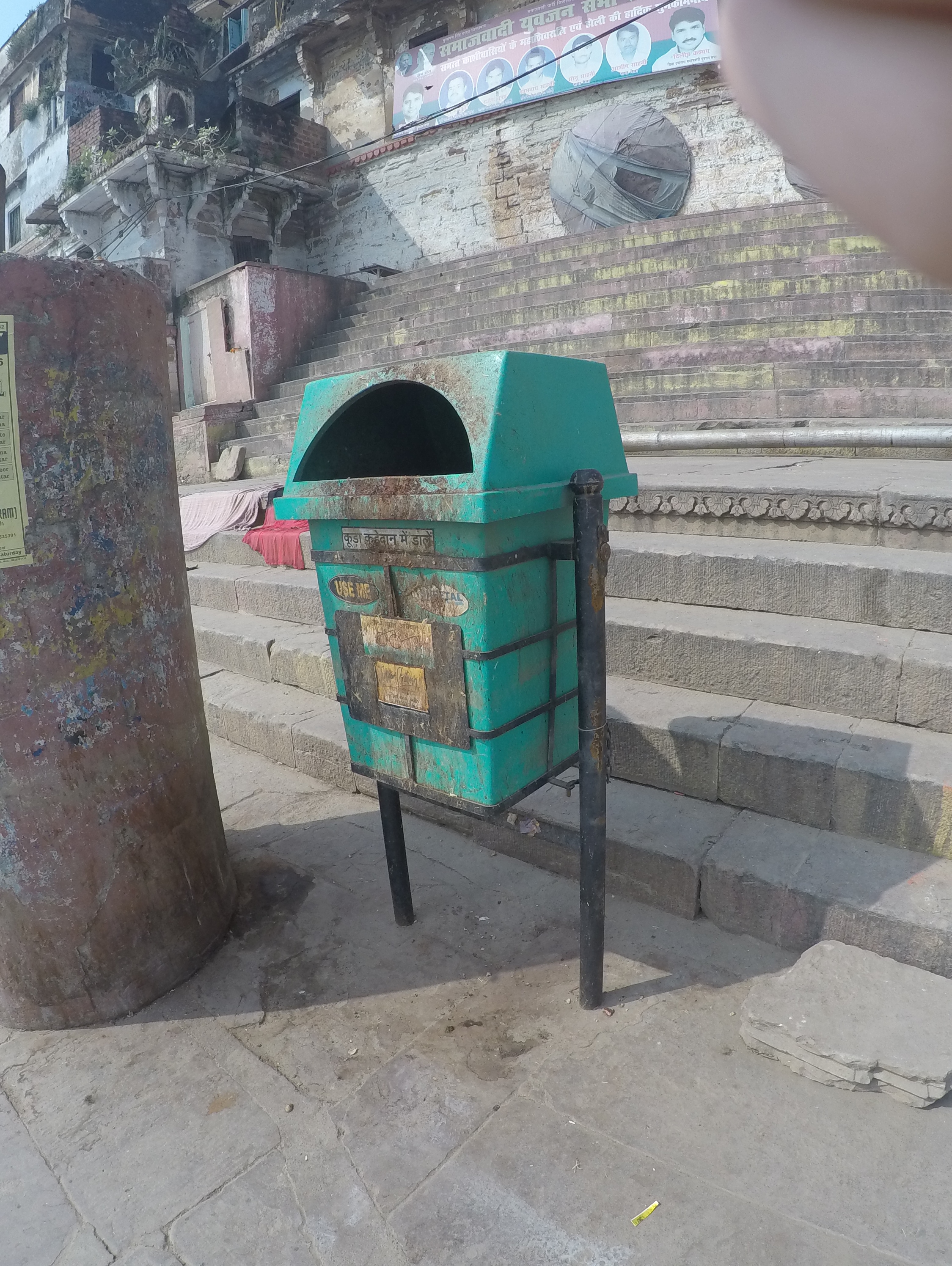
While Swaach Bharat banners or municipal emblems were emblazoned across support poles and buildings near the ghat, I felt as if the local authorities were fighting a losing battle. Much like other cities, the ghats did indeed have waste bins that were easily accessible and visible. However I don’t think I ever saw anyone use them. In fact I witnessed a young man, standing just a few feet from one, toss his empty paper chai cup onto the steps rather than into the bin. But again, like other cities, Varanasi shop keepers do what they can by placing makeshift bins outside their own premises.
Garbage bin on the ghat
As in Raipur, drainage seems to be a challenge in at least the old part of Varanasi. They are often clogged or don’t drain properly and they fill quickly with grey water and sludge.
DCIM100GOPROGOPR0554.
DCIM100GOPROGOPR0552.
DCIM100GOPROGOPR0555.
In the vegetable markets off the ghat there was one medium sized dumpster that sat in the middle of the road and appeared to be market’s only place to dump organic waste at the end of the day. Most days there was just as much organic matter at the base as there was inside – much to the local cows’ delight. However, this is not a safe situation for them because mixed in with the old lettuce and rotten custard apples are pieces of plastic packaging and wire. I would witness the local cows – stray or otherwise – feeding on inorganic trash many times. I even filmed a cow eating trash that was smoldering after someone attempted to deal with it by burning it. Not only that, but cows and stray dogs don’t sit politely at their place and eat. Open dumping and poorly designed dumpsters allow animals to drag waste all over the streets, leading to the spread of rotting food and disease.
DCIM100GOPROGOPR0603.
DCIM100GOPROGOPR0639.
DCIM100GOPROGOPR0640.
Saving the Goddess: Temsutula Imsong
The pollution of the Ganges in Varanasi is by now well documented and a few groups have formed to address the condition of the ghats and the quality of the water. One individual, Temsutula Imsong grew so despondent about the condition of a river she loved so much that she formed her own task force. This group does periodic cleaning of the ghats along the river, in attempt to stem the flow of waste into the water. I had tried to make arrangements to meet with her, but unfortunately our schedules conflicted. However I am deeply inspired by her work and I know even PM Modi himself has personally commended her for her work.
The pollution of the Ganges is not immediately apparent unless you have another section of the river to compare it to, because much of the material that pollutes it floats just under the surface. Some of this can be seen while on a boat, but the river’s dark green color is the real indication that something is very wrong. While keeping plastic out of the river is essential, stemming the flow of human waste and incomplete or partial human cremation is also critical.
Emptying a Lake with a Spoon: Waste Worker’s Uphill Battle
Varanasi’s ancient winding streets are fascinating to wander but also a nightmare for waste workers. In some portions, the lanes are only wide enough to let two people walk shoulder to shoulder. And in most places, the high population creates lanes like clogged arteries. This is no place for garbage trucks – or really any motorized vehicles of any kind (although motorbikes do try, nearly running pedestrians over in the process). Many shop fronts are in these alleys, rather than facing the main road. So trash either has to collect in the alley, or the owner (or more likely someone he hires) has to carry or sweep the waste to the main road, where it is left.
DCIM100GOPROGOPR0620.
DCIM100GOPROGOPR0675.
DCIM100GOPROGOPR0596.
DCIM100GOPROGOPR0556.
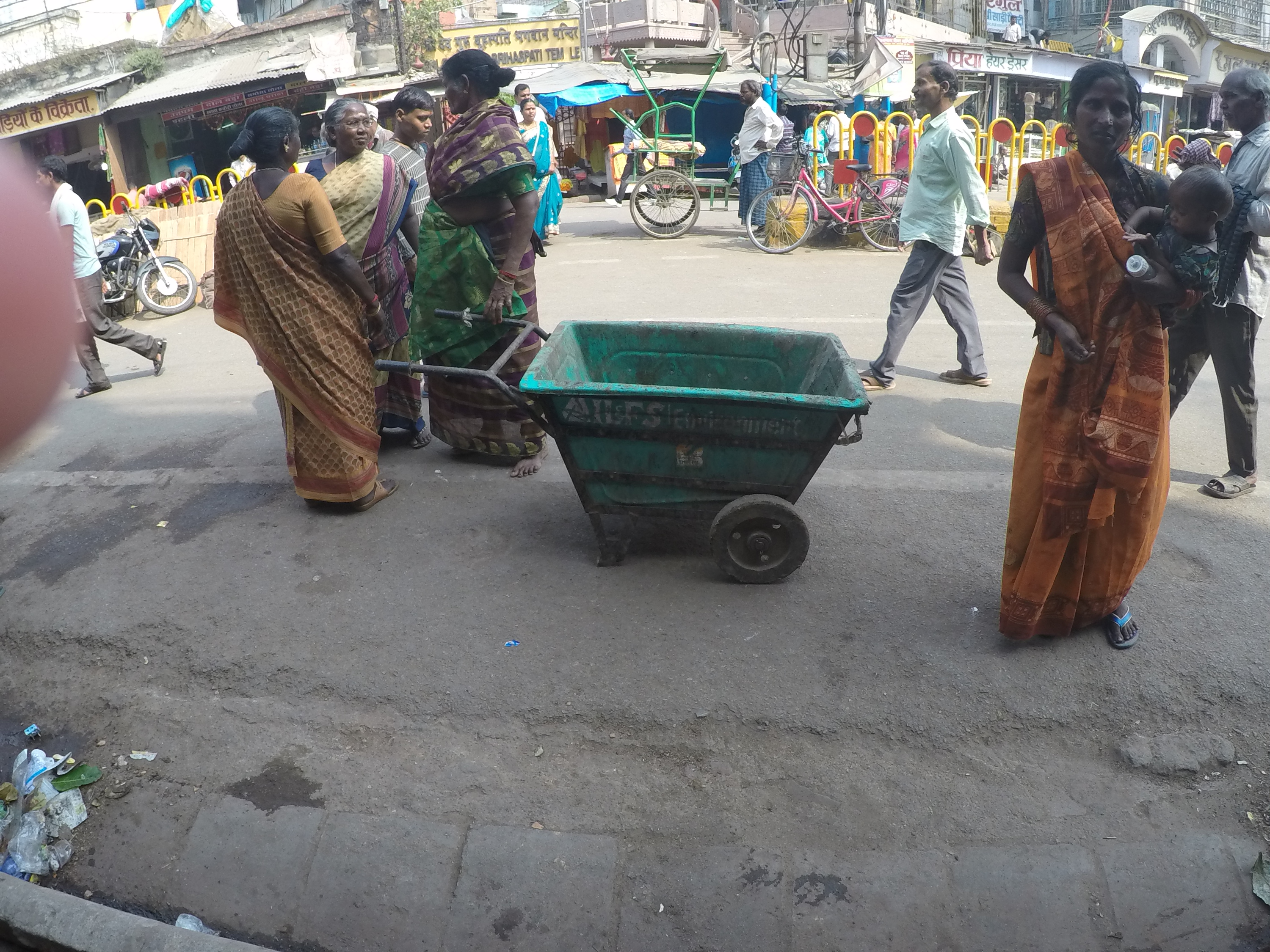
Because of this, there is a daily morning ritual of ill-equipped waste workers walking the roads with carts piled high with collected trash. Using nothing but a few pieces of board to act as a scoop they walk from pile to pile, bend and pick up the trash manually. While this is indeed inefficient and hazardous to the worker’s long term health, wheeled carts appear to be the only way of navigating narrow lanes in absence of public dumpsters. There simply isn’t space for them.
Motorized trucks have to remain on the main road.
Example of carts used by waste workers.
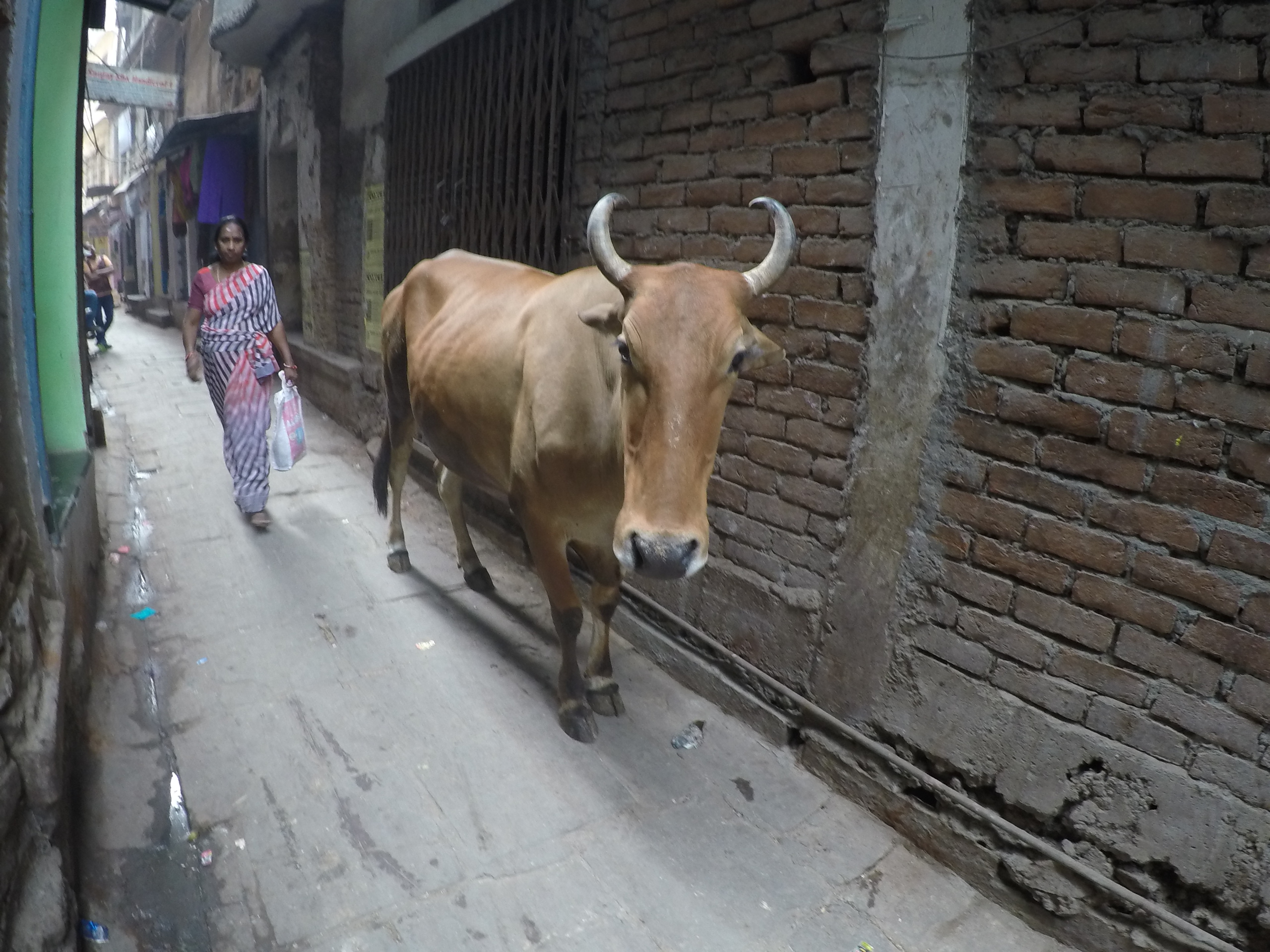
For the removal of construction waste, donkeys are used to carry cement, sand and rubble out of alley ways. Technically it works, but the constant hustle and bustle of animals and people in these tight spaces creates a dangerous situation – one I both witnessed and experienced first hand. On both occasions, a cow and a crowd of people were all jostling to get through a narrow path. In the first occasion, the cow panicked and nearly trampled several people. In the second case, as I paused in an alley to check the time on my phone a cow in front of me decided I wasn’t moving away fast enough and I got a horn to the ribs as a warning.
Cows and other animals make their way into the alleys for the chance of a meal from many of the places shops casually dump their waste and in the end something has to give. My money is on the 1,000 lb hoofed animal.
The one thing I find hopeful about Varanasi is that it has become the focal point for the cleanup work on the Ganges and that is a multi-layered problem that involves dealing with solid waste management. My hope is that if effective waste management methods can be developed and implemented in Varanasi that other cities along India’s waterways will take note and follow.
___________________________________
Next week I explore Rishikesh – a holy city that also hugs the banks of the Ganges.
___________________________________
If you would like to learn more about the individuals or organizations mentioned in this post please visit the links below:
My visit to Mumbai was a quick two day excursion from my base in Pune and because of the tight schedule (and a few minor mishaps) I didn’t get any photographs for my project. However, I did manage to take some short video clips which I will be posting on my facebook page. (My current WordPress account doesn’t allow direct video uploads)
Excel Industries, Mobi Trash and 94.3FM Radio One
Mumbai is about a three hour drive from Pune. After getting lost a few times my driver was able to get directions to my first destination, Excel Industries, where I met with my contact Saurabh Shah, who also happens to be the mind behind Mobi Trash, a mobile composting unit that serves individual patrons all over Mumbai.
At Excel Industries, I was introduced to a few of the chief officers over lunch. After chatting for a bit about my purpose I was taken up to the Environmental and Biotech offices where Saurabh and I spoke further about Excel Industries work. The E&B department of Excel Industries deals primarily with the development of large scale composting machines that can be used for apartments, hospitals and other large institutions. Because of changes to laws regarding how large institutions have to deal with their waste, Excel is one of several large companies capitalizing on the demand for third party waste management solutions. I had the opportunity to watch one of their composters in action and saw the process from start to finish. Some of the compost is used for the company’s rooftop garden which in turn produces plants needed for agricultural research.
That evening, Saurabh and I went for a short interview together on a local radio program call ‘Drive Mumbai’ on 94.3FM Radio One. We spoke with the host, Erica about our various projects (Me and my SWM research in India, and Saurabh his work with Excel and Mobi Trash). Like my radio interview in Raipur I was nervous, but was a bit more prepared since this interview had been set up far in advance. My only regret is that I was never able to listen to final broadcast once it went live. However, I hope I was able to communicate my ideas well enough.
Saurabh Shah, Erica D and Me!
After the interview, evening was coming on fast and it was time for me to get back to my hotel for the evening. Saurabh made arrangements for me to visit one of the Mobi Trash units the following day with one of his co-workers and we parted ways. Mobi Trash utilizes trucks outfitted with portable composting machinery and travels to specific customer’s homes or small businesses in order to process their compost. Customers pay a nominal monthly fee for the service and according to Saurabh is slowly gaining in popularity.
Unfortunately, I would never get to that visit because of some problems that came up with my accommodations, after which I became sick. I would spend the next day recovering in a different hotel and organizing my notes from the trip up to that point. (Although back in Delhi, during the INDOSAN convention I was able to see the Mobi Trash truck from the outside).
On my one outing during this time where I brought my camera I documented mostly organic waste on Mumbai’s back streets. Imagine if a grocery store, rather than dump its waste in a dumpster to contain it, simply left it in a pile on the side of the road. As I observed birds and dogs taking advantage of the free meal I also observed what a safety hazard it posed for animals and humans alike. With cars, bikes and dogs weaving in and out of traffic in order to avoid or get to piles of organic waste, it’s just a matter of time before a serious collision takes place. (In Bengaluru I was witness to a motorbike accident in which a man’s bike toppled over on one leg as he tried to avoid debris in the road.)
_________________________
The next two destinations on my journey – Udaipur and Jaipur, would end up being a short break in my research work. However, once I returned to my research in Varanasi, I would see and learn so much more.
_________________________
If you’d like to learn more about the companies or individuals mentioned in this post please visit the links below:
Even though I traveled back and forth to Mumbai while keeping my base in Pune, I’ve decided to split up the two cities into their own blog posts for clarity.
Pune reminded me of Bengaluru in a lot of ways. Its citizens seem to be more conscious overall of the waste issues than some of the other places I visited. However, it was in Pune that I really saw for the first time the devastating effects of pollution on India’s holy rivers.
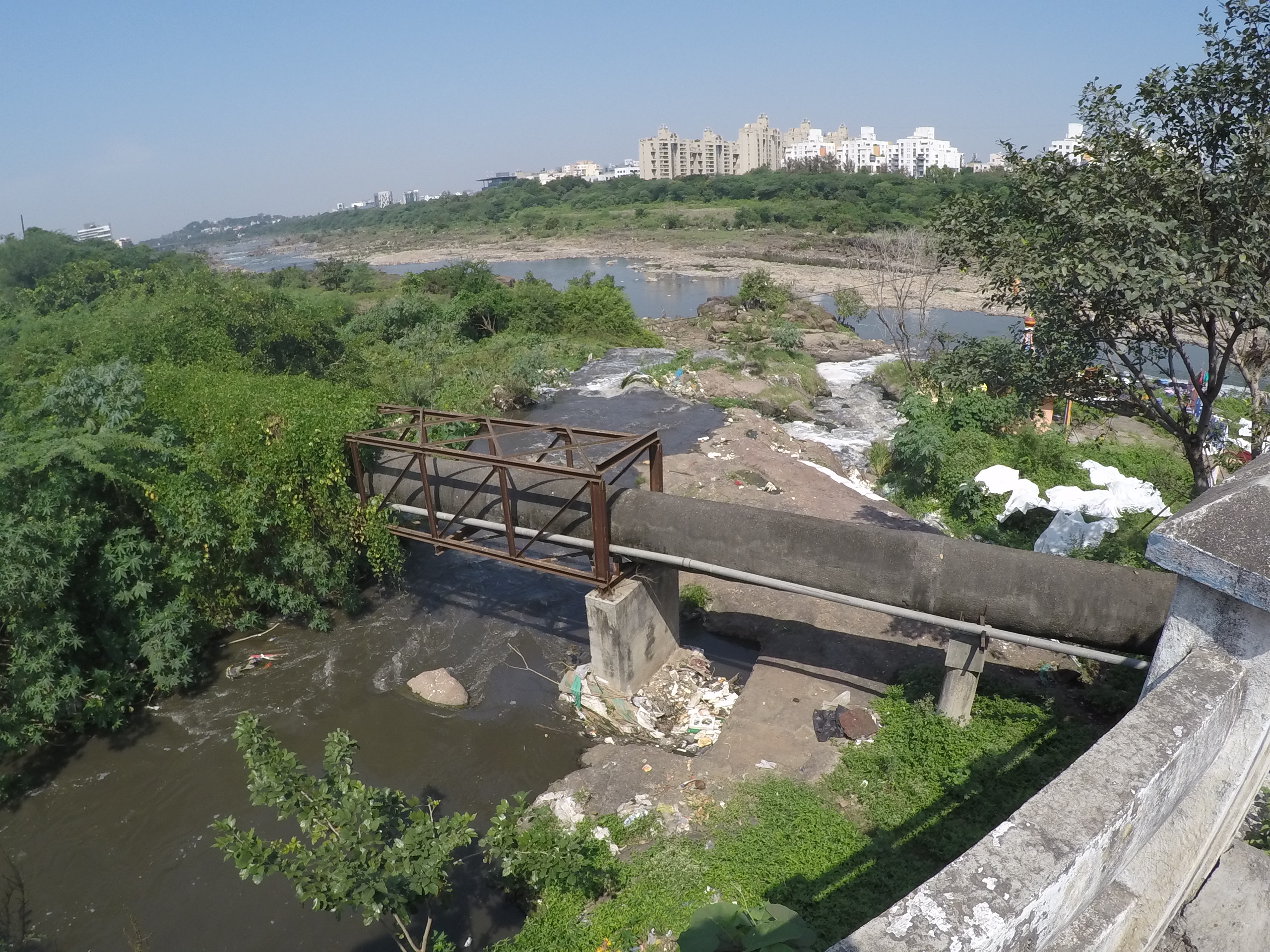
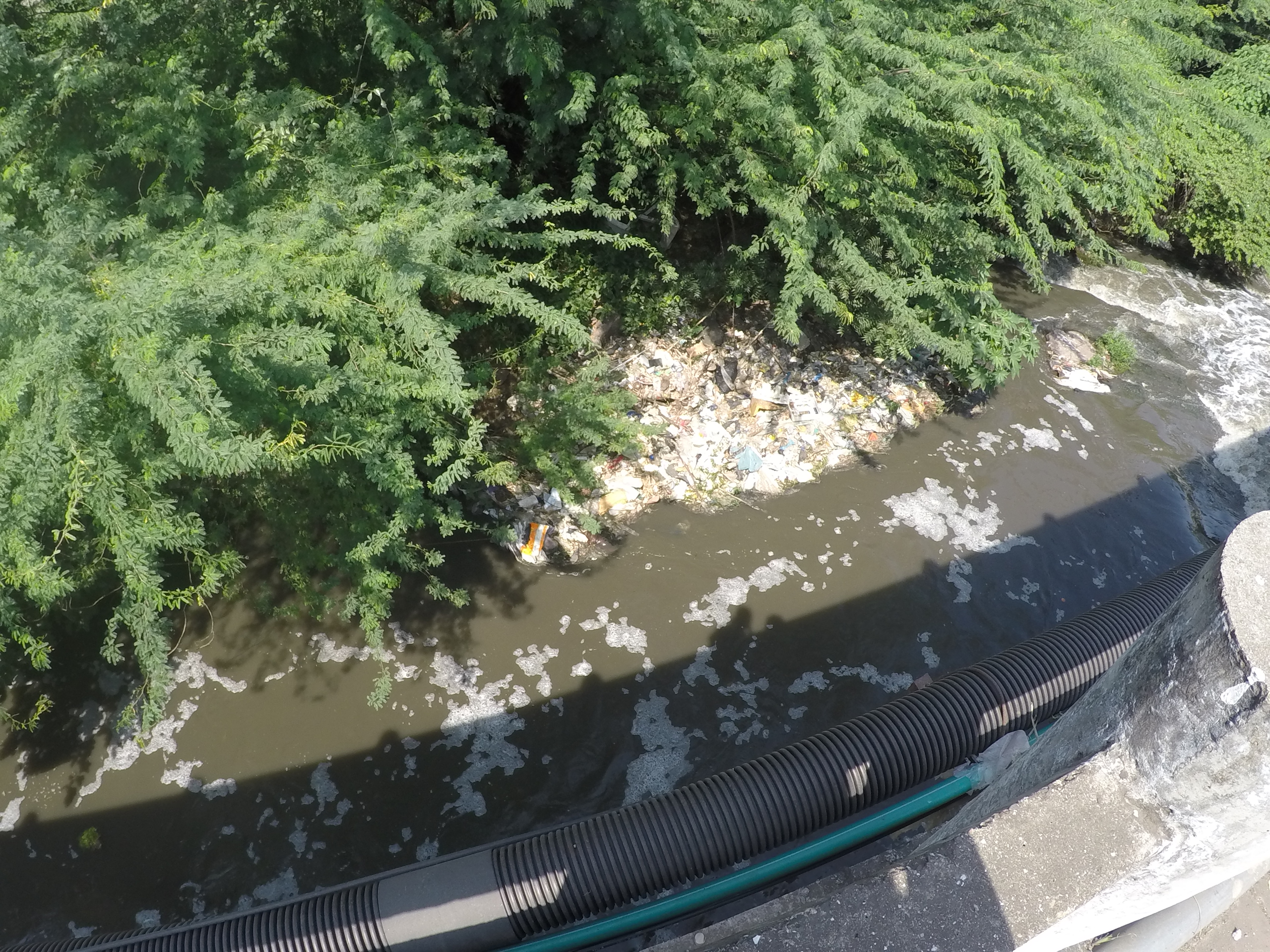
The Mula River runs through the northern part of the city and like most rivers in India had taken on the burden of a lot of the poor waste management practices in Pune and other cities further up-stream. Drains and riverbanks clogged with plastics and fabrics were impossible to miss, but aside from the site of pollution, there was also the unforgiving smell. As I took photos and video of the river from the bridge above I noticed that parts of the brown, putrid looking water were roiling or boiling in pockets. When I tried to look up what these might be, the best answer I was able to find was that they were most likely the result of methane gas – a byproduct of decomposing waste – bubbling up from the riverbed. If this is true that would mean that years and years of pollution that have deposited in layers below the river are releasing this green house gas into the atmosphere at a constant rate. As I looked further down the river from my vantage point I could see women in beautiful, colorful clothes, washing their laundry in this toxic river. It made me incredibly sad because I know how much people depend on the river, and yet it is already poisoned.
The rest of my walk consisted of documenting what appeared to be informal dumping sites around the city, where feral pigs did their best to make a meal of whatever they could pull from the mountains of inorganic matter.
DCIM100GOPROGOPR0477.
DCIM100GOPROGOPR0465.
DCIM100GOPROGOPR0469.
DCIM100GOPROGOPR0470.
DCIM100GOPROGOPR0466.
Truthfully, my mood hit an all time low in my first few days in Pune because of the plight of the river. However, hope springs eternal, as they say, and a few days into my Pune visit I met an Indian woman who would help me see the light at the end of the tunnel again.
Rudra Environmental Solutions/ Keshavsita Trust
I had the pleasure of sitting down with Dr. Medha Tadpatrikar, the entrepreneur behind Rudra Environmental and the NGO Keshavsita Trust. Dr. Medha main focus has been on developing a a process to transform plastic bottles back into usable fuels called ‘Gasolysis’.
From their website:
GASOLYSIS is the decomposition of a condensed substance by heating. It does not involve reactions with oxygen or any other reagents but can take place in their presence. The waste plastic is converted in to Poly fuel by process of Catalytic Gasolysis Process. The yield produced is almost 50 to 55% of the plastic waste disintegrated. The process provides an integrated plastic waste processing system which offers an alternative to landfill disposal, incineration, and recycling—while being a viable, economical, and environmentally-responsible waste management solution. The Rudra Process can easily handle plastic that is contaminated with other kinds of waste such as, dirt, water, etc.
As a result, a key advantage of this process is that the plastic wastes do not need to be pre-sorted, cleaned or dried prior to processing, which in turn significantly reduces the overall cost of operation.
The output poly fuel can be further processed in a refinery or used to power low-rpm machines such as electric generation turbines.
Dr. Medha showed me a sample of the brownish translucent final product during our meeting and I was very intrigued. The discussion quickly turned to how all these plastics are gathered. It was here that Dr. Medha confessed that the small scale of their operations was still one of the biggest barriers to the technology having a larger impact. As of our meeting, the company only had a handful of employees. They have developed a monthly collection route that customers can sign up for (the service is free). They schedule pickups of people’s separated plastics and use their personal vehicles for transportation. Dr. Medha emphasized that the first goal is to get people into the habit of separating and acknowledging the value of recycling plastics. Any plastics her customers wish to sell by traditional means (to waste pickers for example) she encourages them to do so. But any plastics that that can’t be sold, she agrees to take. It is her that the machines her company is developing will be adopted by larger industries in order to take on the very large problem of plastic litter.
She was full of enthusiasm and optimism, but also a realist. I found I related to her a lot. I look forward to following her company’s progress.
Pune Municipal Corporation / Excel Industries
After my visit with Dr. Tadpatrikar, I spent a few days in Mumbai with Excel Industries, a leader in the development of large scale composting equipment. However, I as I mentioned above I will speak about Mumbai in my next post. After my return from Mumbai, I still had a few days scheduled in Pune and I had the opportunity for two more educational meetings.
Excel Industries had put me in contact with one of their representatives working in at a public waste management facility operated by the Pune Municipal Corporation. I met up with Mr. Nilesh Bhagat who oversees one of three large facilities in Pune that collect and process organic waste after separating out the dry waste.
I was given tour of the facility and shown how the composing machinery works. I also saw how time consuming and tedious the process of separating mixed waste can be. While most organizations and municipalities continue to stress the importance of separating waste at home, efforts to separate the mixed waste at large facilities is also being attempted with limited success. Unfortunately, at leas with this facility in Pune, the separation process is entirely manual. A few workers hunch over piles of mixed waste and meticulous dig through by hand in order to remove the largest chunks of inorganic matter. Mr. Bhagat acknowledged the insufficiency of the process, showing me a handful of processed compost that still had shredded candy wrappers in it. This is what is called low quality compost – usable but not ideal. It also sells for even less than high quality compost. The compost made at this facility is used by the city for public gardens or sold to interested buyers like farmers.
Mr. Bhagat explained that the larger plastics were not the most problematic because they are valuable for recycling and easy to remove from compost. The problem plastics are the candy wrappers and food packaging which shred easily but are not valuable for recycling purposes. These are the plastics that remain in landfills and get caught up in compost.
Swati Pednekar – Community Leader and Waste Warrior
For my final meeting I was put in touch with an inspiring personality through my connections with Excel Industries. Mrs. Pednekar, an Anthropologist by training, has taken up the cause of waste management on a local level through community outreach and education. Her concerns aren’t limited to humans but also extend to the effect of waste on street animals, dogs in particular. She has taken up their cause, endeavoring to educate people on the harmful effects of litter on all life. Through her community work, she has managed to forge a relationship with the Pune Municipal Corporation in order to provide regular waste pickup to various neighborhoods in the city. Swati’s method involves getting individual communities to address the specific needs of the households in a given area, so that each section or block can decide as a group what waste management solutions work for them. She also works with waste pickers and street cleaners in these areas, setting them up with supplies, uniforms and ID cards so that the community begins to feel they can put more faith in them. Also, she informs them about their legal rights so they they can organize if they choose in order to demand better wages and fair treatment.
I could have spoken with Swati for hours, but it was just my luck that my stomach had begun to give me trouble during our meeting. It was a last minute meeting that ended up being one of the most enjoyable and insightful.
_________________________________________
Next week I write about my experiences in Mumbai, which included a radio interview!
_________________________________________
If you are interested in learning more about the companies and organizations listed in this post, please visit the links below:
Bengaluru, arguable India’s largest tech hub and home to an expanding population of foreign students, companies and organization proved to be one of the most promising cities in terms of solid waste management development that I visited. Though I would come to learn of Bengaluru’s many persistent problems in this area, I would also find more innovation and more social outrage, which has spawned many municipal projects and reforms.
Sign from Lalbagh
Sign from Lalbagh
Signage painted on wall near busy street
Bengaluru was the first city that I actually saw a real garbage truck. It was one of those things I hadn’t realized I hadn’t observed in the first two cities until suddenly there it was. In Bengaluru, I had only scheduled one interview for later in the week, but as the days passed, casual acquaintances would help connect me with more and more waste management professionals and resources.
My initial impression of Bengaluru was that it was over all much cleaner that Raipur or Delhi. Piles of trash and casual littering didn’t seem to be as much of a problem. What I did observe quite a lot of was construction and demolition waste, which given Bengeluru’s rapidly expanding population makes some sense.
DCIM100GOPROGOPR0356.
DCIM100GOPROGOPR0283.
DCIM100GOPROGOPR0286.
DCIM100GOPROGOPR0357.
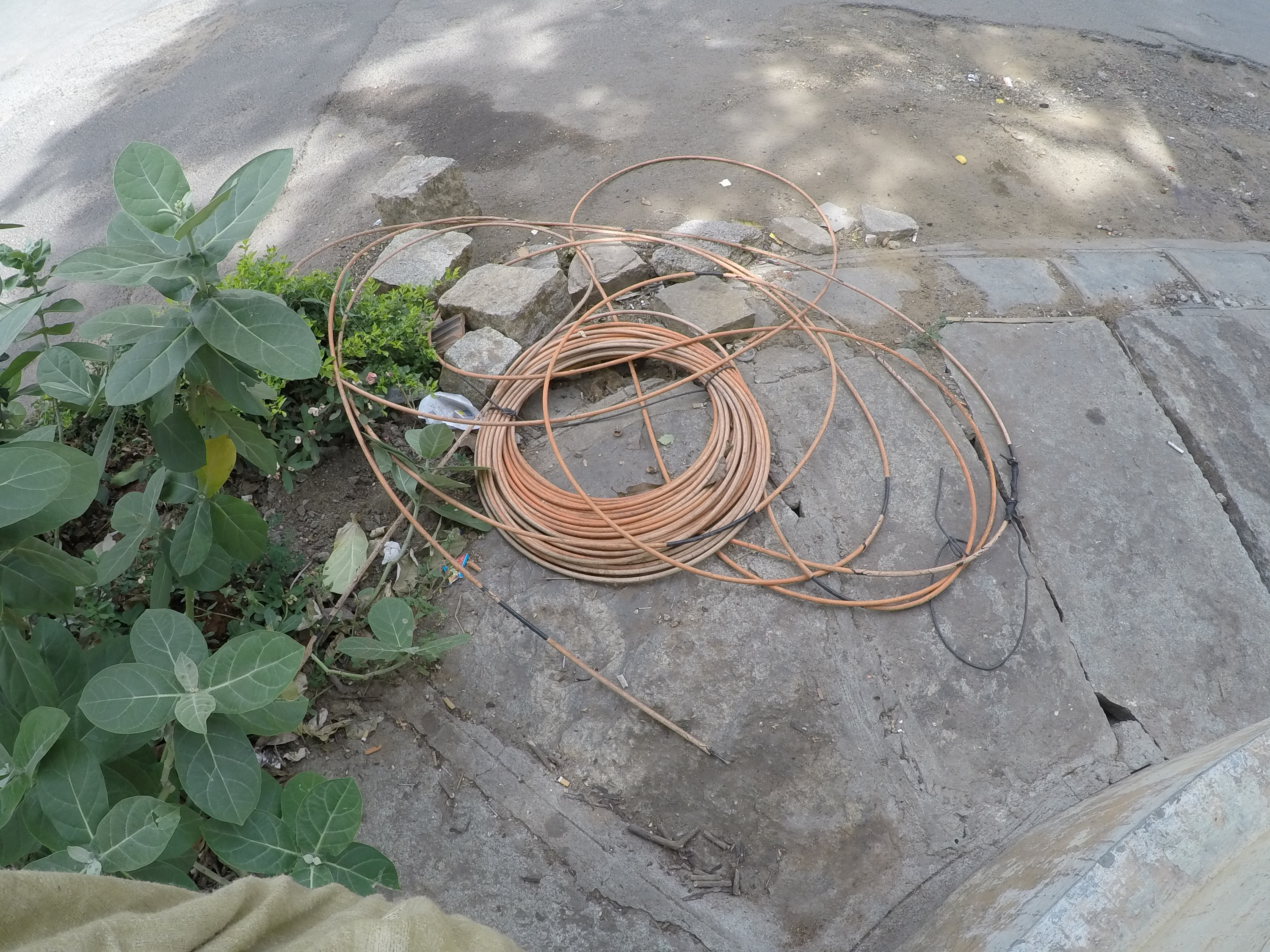
However, even in the relatively upper -middle class area I was staying in, unused bricks, coils of abandoned electrical wires and even concrete sewage piping were left on sidewalks and partially obstructed roads. I had to tip toe around one jumble of wires as I wasn’t sure if it was still connected to power or not, although the characteristic hum of electricity was absent.
As I made my initial explorations around my neighborhood near Lalbagh West, I began to see small corners of packed litter and debris were collecting in random spaces between buildings or in unmanaged pockets of green space near traffic intersections.
DCIM100GOPROGOPR0262.
DCIM100GOPROGOPR0270.
DCIM100GOPROGOPR0350.
DCIM100GOPROGOPR0264.
DCIM100GOPROGOPR0235.
DCIM100GOPROGOPR0275.
DCIM100GOPROGOPR0348.
DCIM100GOPROGOPR0134.
DCIM100GOPROGOPR0140.
DCIM100GOPROGOPR0273.
DCIM100GOPROGOPR0261.
DCIM100GOPROGOPR0295.
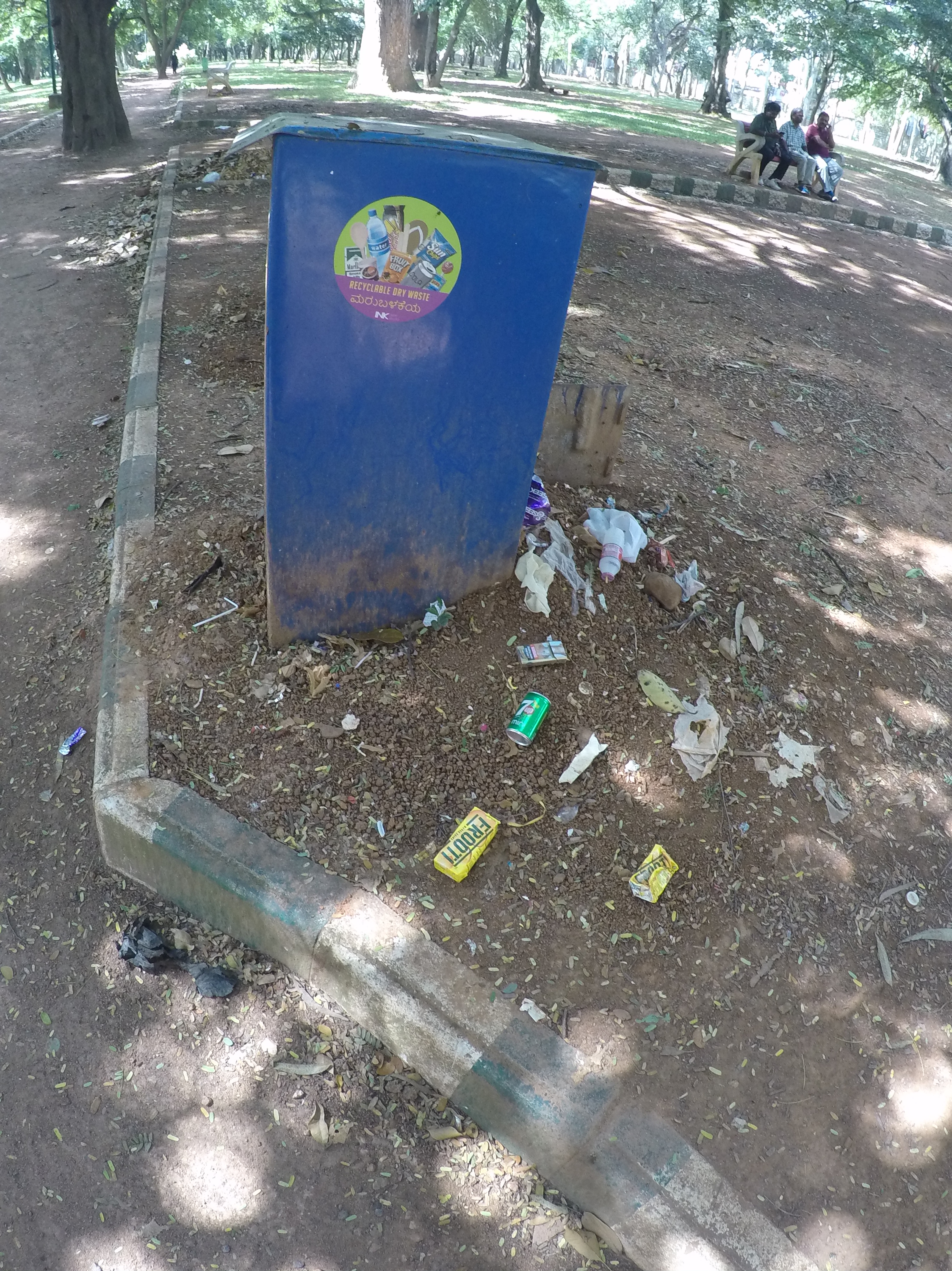
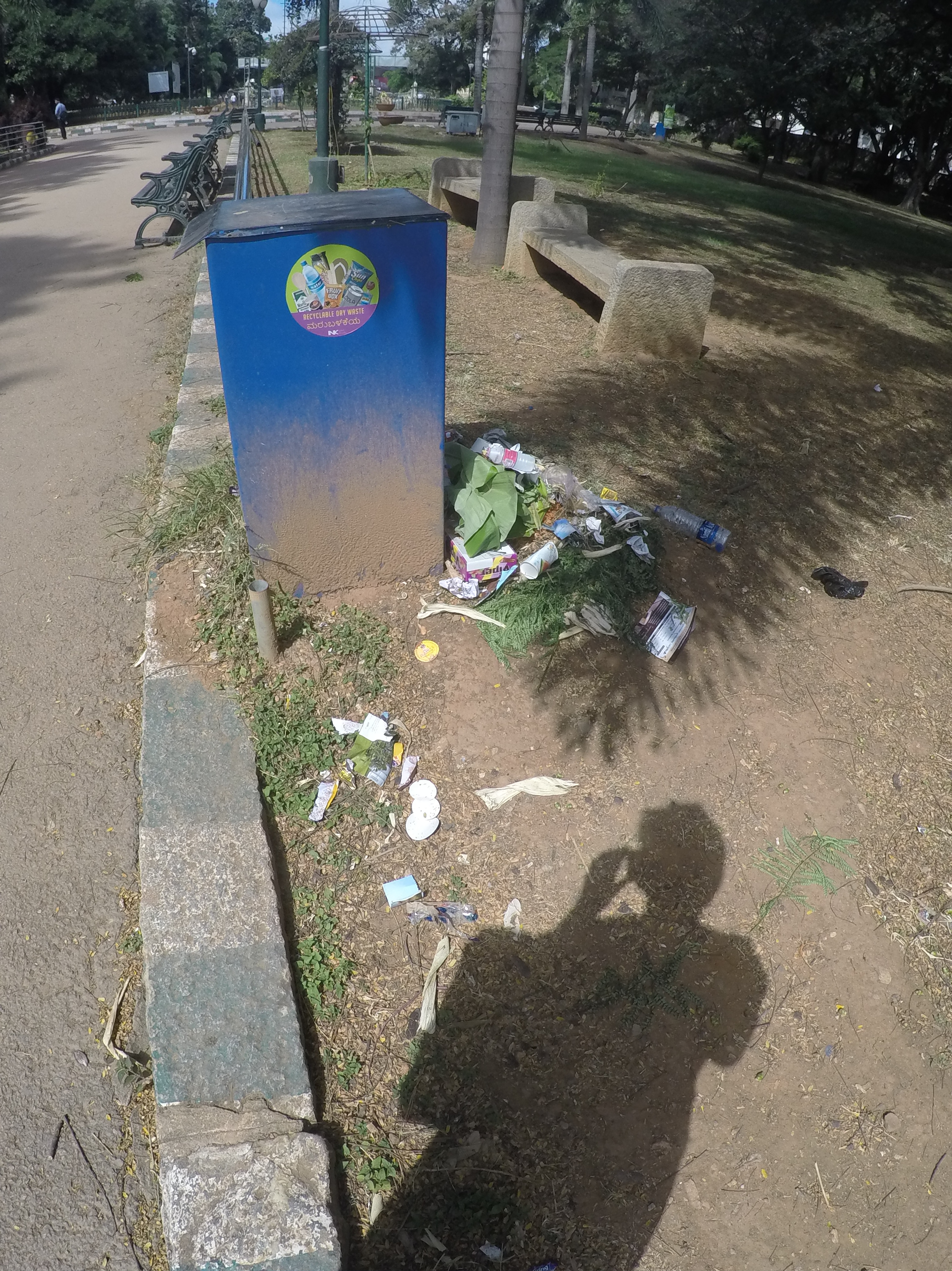
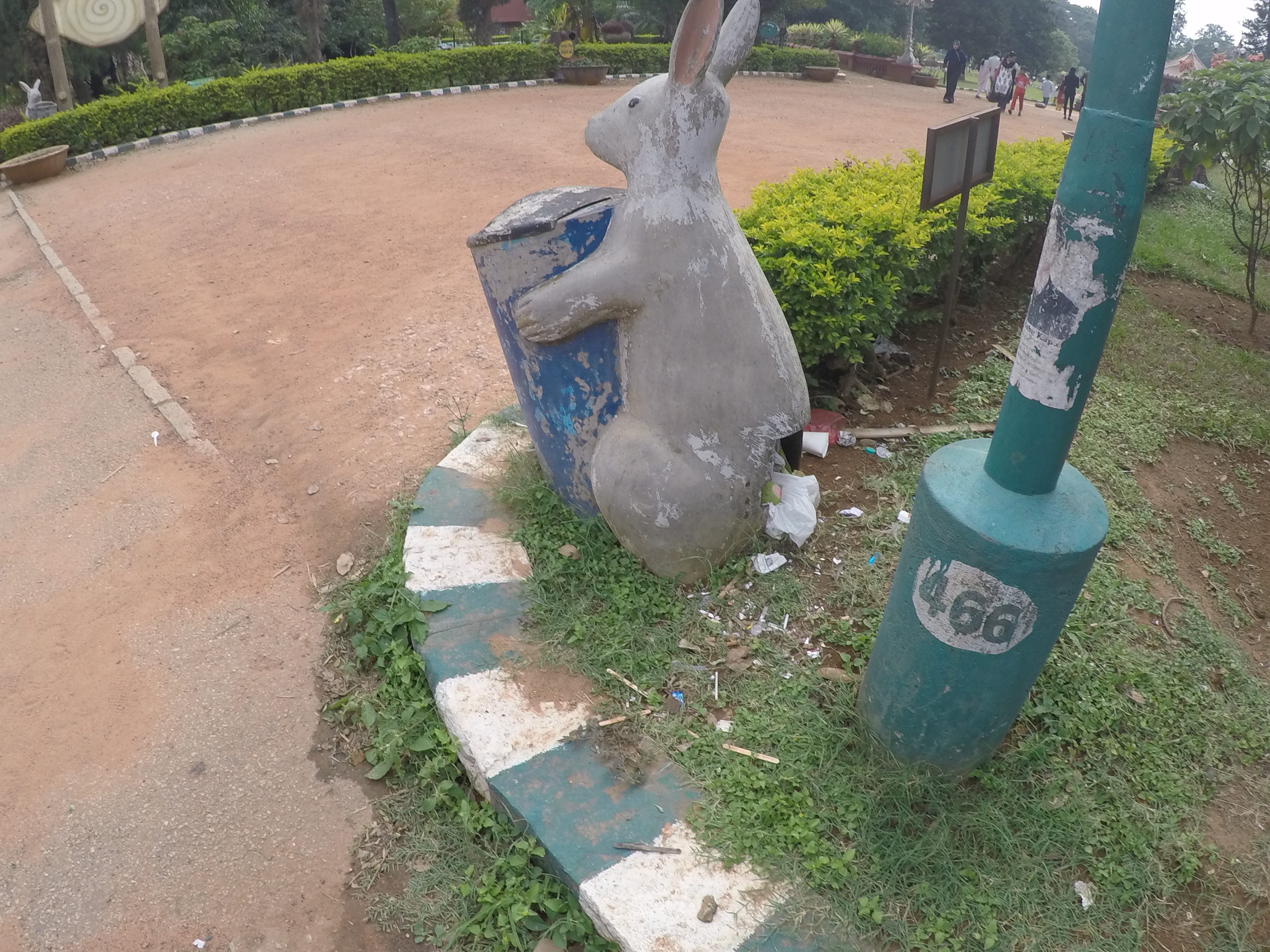
I continued to explore my interest in public dust bins by starting with a walk through LalBagh, a lovely park with many paths, old trees and even a small lake. The paths remained relatively clean despite the amount of foot traffic. Here, as with central park in Connacht Place in Delhi, numerous trash bins were available every 20 to 30 feet or so, depending on the part of the park I was in. There was always a bin within site of wherever I was. Unfortunately, Lal Bagh suffers from the same dustbin design issues as Delhi, with one extra one added on. As I inspected the back of the dustbins I saw that the latched door used to remove trash from the bottom of the bins was almost always broken open, in some cases appearing as if an animal had actually chewed the bin open. The bins seem to be made of some kind of plastic or fiberglass, which leads me to the next issues.
Presumably in an effort to maintain the scenic feel of the park, many of the bins are designed to look like tree stumps. While they are labeled as bins, I actually think it’s a bad design idea because in some of the more heavily wooded areas of the park, the bins are easy to miss from a distance because they are essentially camouflaged. The only indication of their intended purpose often, unfortunately, is the pile of trash spilling out the back of them, which I can imagine is enough to discourage anyone from using it.
DCIM100GOPROGOPR0147.
DCIM100GOPROGOPR0260.
DCIM100GOPROGOPR0145.
On the flip side, much like Raipur and Delhi, individual shop and business owners seem to be doing their best to keep their immediate area tidy by putting out informal waste baskets. In addition to that, many seemed to extend their sphere of cleanliness responsibility to the several feet of sidewalk on either side of their shops. Early morning sweeping and hosing were common sites here.
DCIM100GOPROGOPR0274.
DCIM100GOPROGOPR0282.
DCIM100GOPROGOPR0269.
DCIM100GOPROGOPR0294.
DCIM100GOPROGOPR0268.
DCIM100GOPROGOPR0354.
My first interview in Bengaluru was actually an unplanned one that rose spontaneously out of my acquaintance with the family I was staying with. My generous host invited me in for breakfast one morning where we chatted about my purpose in Bengaluru and I had the opportunity to speak with his sister, a staunch advocate in her apartment complex for proper and efficient waste management. From here I learned a bit more about the new laws that had been put into place for how institutions and apartment/housing complexes over fifty units are required to handle their waste. It was through her persistent door-to-door campaigning that she has managed to get her neighbors to separate their wet and dry waste as well as maintain the complex’s composting equipment. All institutions like school, hospitals and apartment complexes are required by law to handle their waste on site. They can either do this themselves, or they can hire a contracting company. The penalty for ignoring the new laws are fines, although everyone I spoke to were of the opinion that the fines are not high enough to discourage laziness much of the time.
Individual homes and small businesses are another story. My host’s sister explained that one of the biggest obstacles to separation of dry and wet waste is getting the house staff to do the separating. Most don’t understand the importance of it, or if they do, they don’t see the point in doing the extra work when the garbage collectors come by and dump everything together anyway. (A common problem even in the US.) Still, there has been growth in the popularity of home composting thanks to companies like The Daily Dump that educates the community on the value of composting. They hire local artisans to make attractive composting pots that are small enough to work in homes. Most Indian households have at least an open air balcony suitable for small scale composting.
Which brings me to composting. Composting is big in India, but I saw its presence most clearly in Bengaluru. Even today, between 60-70% of all of India’s waste is organic wet waste, meaning it is suitable for composting. As corruption and misallocation of funds stifles management of inorganic, dry waste, several systems (though small in scale) are in place to deal with organic waste. The trouble again though, is the separation of wet waste from dry. Without separation, organic waste becomes useless for compost because too much contamination has taken place from plastics and hazardous materials. Still, Bengaluru seems to be at the forefront of this effort to make organic compost a viable option for reducing the total volume of waste in landfills, as well as providing an affordable and environmentally friendly option for farmers and municipal gardeners.
As the days went by and my meeting with Saahas Zero Waste approached, there was a bit of last minute trouble nailing down a specific time for the meeting. Eventually, the plan was pushed back so far I worried I wouldn’t get to meet with representatives at all and that my time in Bengaluru would not be as productive as I had hoped. But suddenly, three days before I was set to leave, not only was my meeting with Saahas confirmed, but through a contact in Mumbai I was put into contact with another company in Bengaluru, Vennar Organic Fertilizer. The power of industry connections would help me a few more times during my trip and it helped me meet people I would otherwise not have.
Vennar Organic Fertilizer
As the name suggests Vennar is a company that supplies composting machinery and provides support services for institutions and the local government to process organic waste. The company is run by a father and son team, both of whom I had the pleasure of meeting and speaking with during my time in Bengaluru. The son, Avinash, was kind enough to pick me up from my homestay and take me first to one of their small composting sites, where we conducted an interview and site tour. Avinash was kind enough to let me photograph and record video and audio for my project, so I was able to learn and retain a lot from the visit. From Avinash, I was able to see firsthand how the composting process works from start to finish. I was also able to see how organic composting improves the lives of waste pickers who are able to find work as Waste Separators at these sites. Avinash explained that mixed waste dumped at the site is meticulously separated by the waste pickers, organized on site and then the pickers are allowed to sell whatever dry waste they separate to recyclers or itinerant buyers. According to Avinash, while the work itself is not any more glamorous than what they would otherwise be doing on the roads and at dump sites, the composting facility offers a measure of reliability and income, as well allows the pickers to work without having to travel several miles each day to find suitable dump sites.
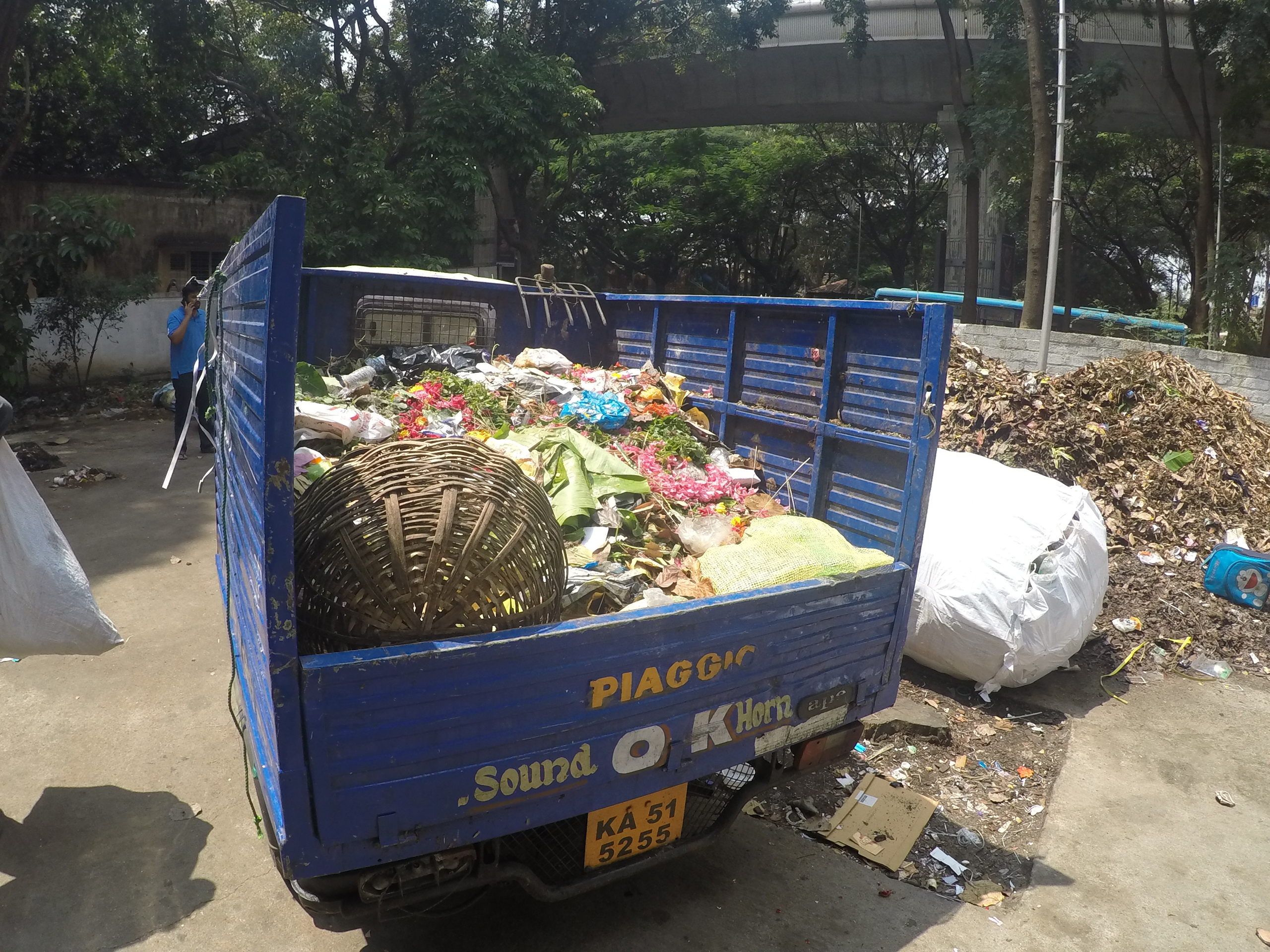
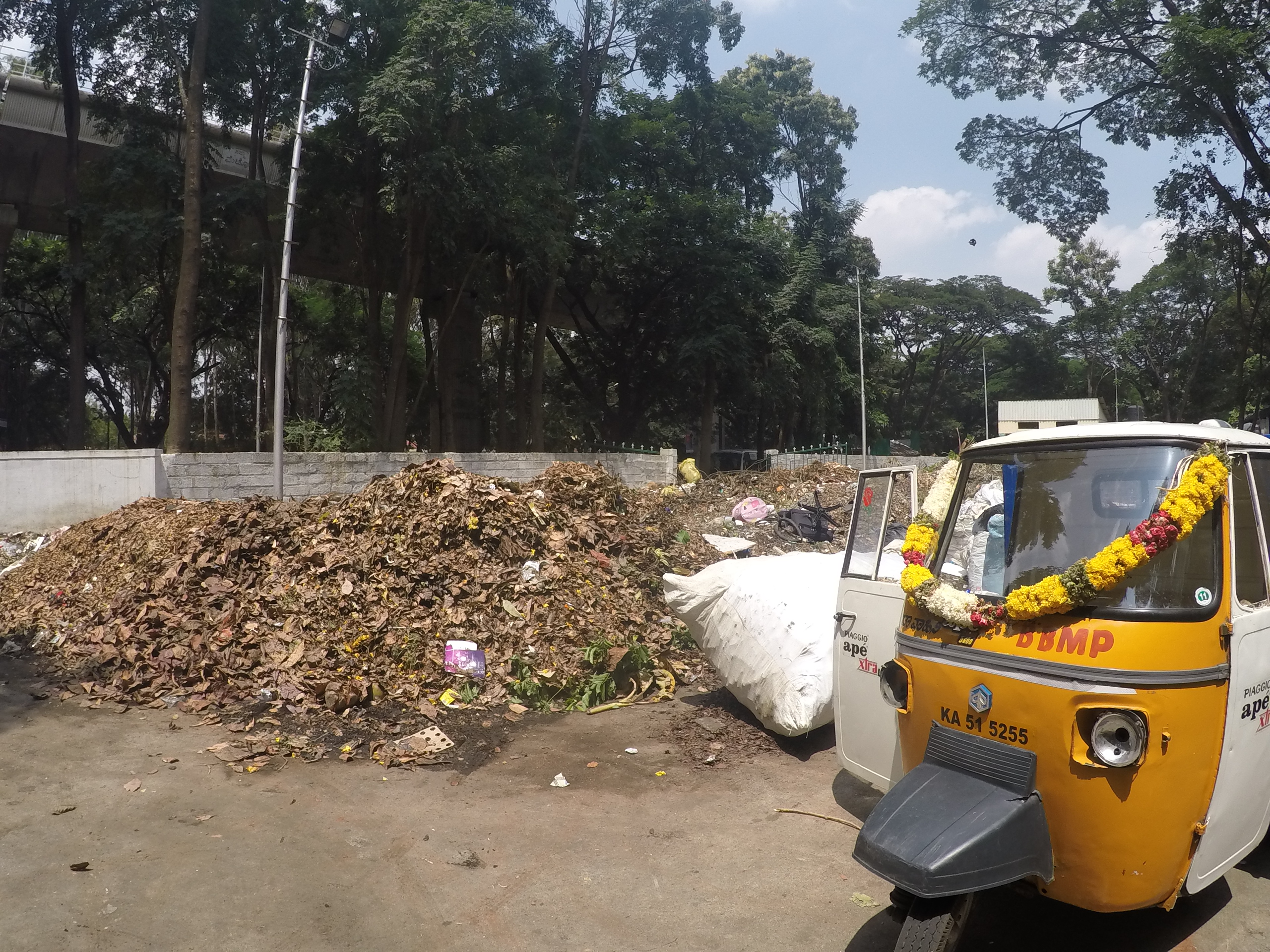
A truck brings in the latest batch of waste to be processed
Taking up very little space, this machine can process 1,000 kilos of compost in a day
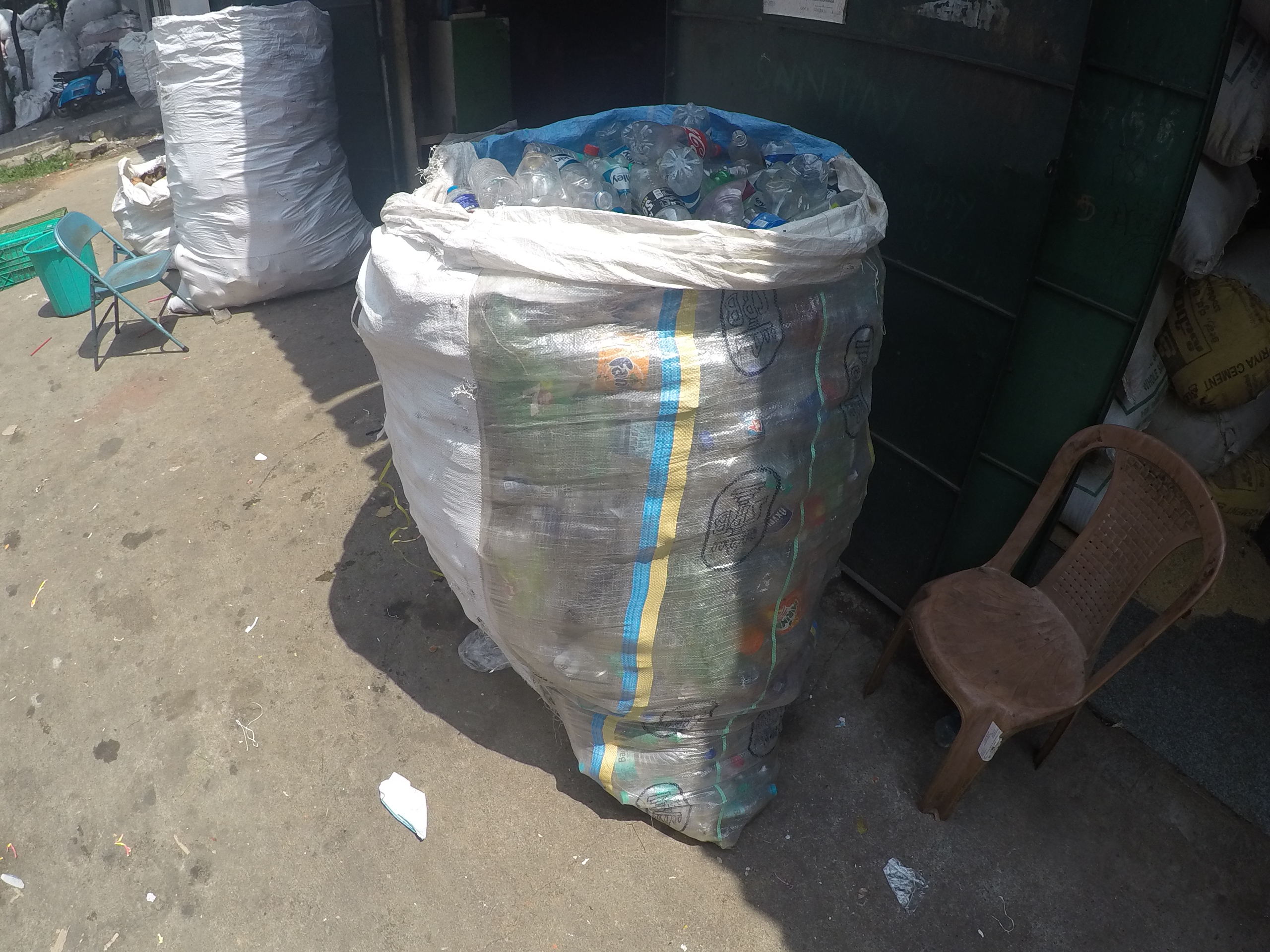
Plastic separated from the organic waste and bagged for sale by the waste separators.
Organic waste is mixed with dry leaf waste from municipal gardens.
A small group of waste separators categorizing different types of recyclable waste
I was struck by how little odor there was. Avinash explained that while organic waste left to rot in the sun will begin to smell, organic material that is properly composted using certain natural microbial additives will lack this noxious odor.
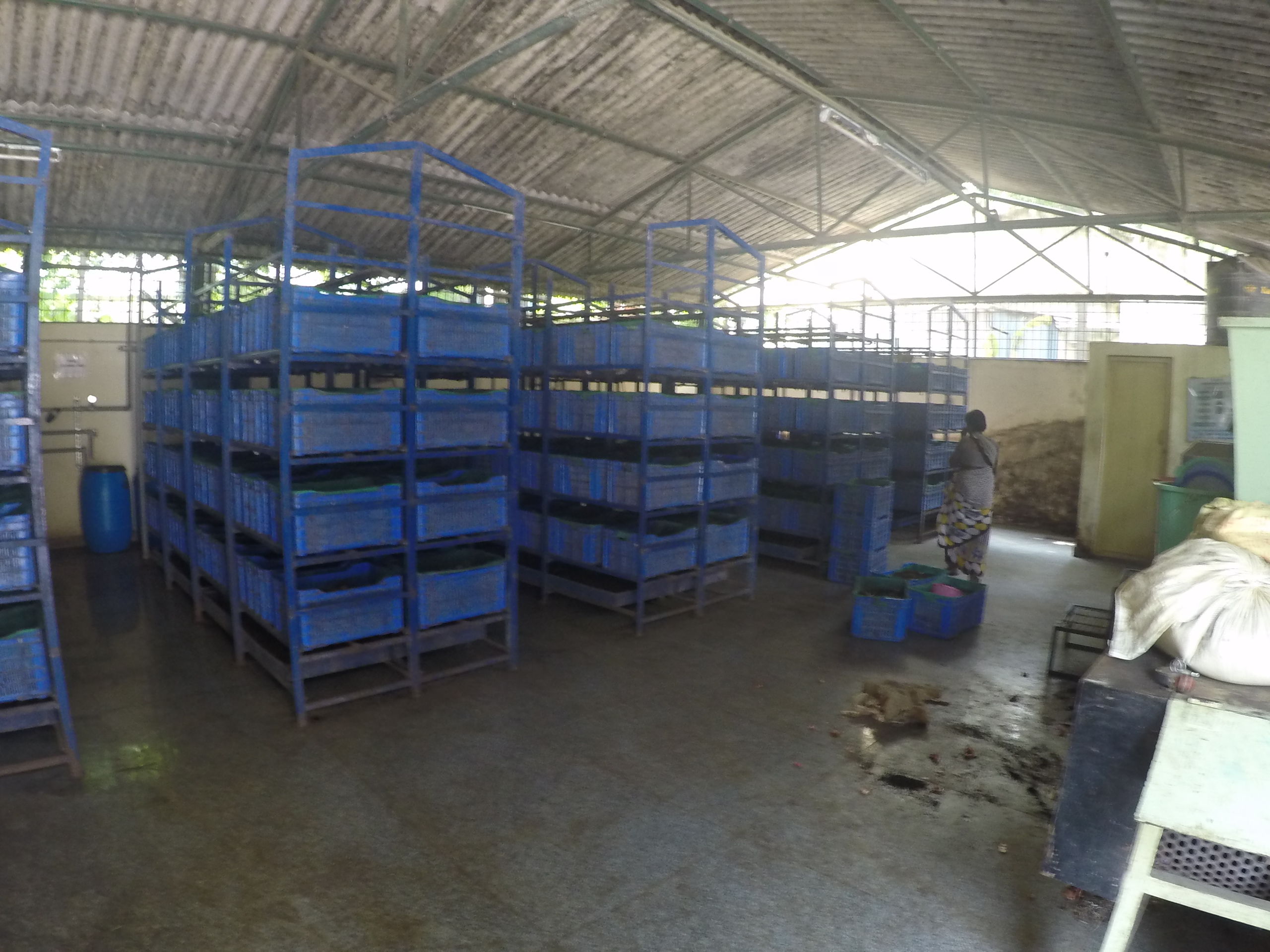
Stacks of crates containing organic compost at various stages of decomposition
Our next stop was a quick visit to the Vennar main office to meet with Avinash’s father, Narendra. We spoke in more detail about the work Vennar does and I did my best to answer Narendra’s questions about the state of waste management in the US. Afterward, Avinash introduced me to his wife Sruti who I would learn is an amazing entrepreneur in her own right. Over lunch she discussed her discovery that organic compost would be used as a highly nutritious, partial substitute for expensive chicken feed. Partnering with a local university, she was able to conduct lengthy studies on the safety and sustainability of compost as feed, and with patents and interested buyers already in place, it would only be another year before Sruti and her company, Bionar, hoped to have the product available to sell.
One of the major implications of this addresses one of compost production’s longest standing challenges, which is that more can be created than used and also the product can’t be sold for very much, making it difficult to convince the waste management industry to invest in large scale production of it. Substituting 30% of traditional feed with compost opens up a new area of profitability as well as sustainability. I very much look forward to following Sruti’s progress. It is native entrepreneurs like her that will be the key to India’s Waste Management success.
Saahas Zero Waste
My final meeting in Bengaluru was with Saahas Zero Waste, an organization that started out as a social enterprise and gradually developed a sophisticated business philosophy around waste, waste generators and waste resources. Dealing mostly with recyclable materials they attempt to follow the life-cycle of waste from creation to re-creation, to close the loop that so often allows waste to slip out of the resource pool and into the environment where it harms humans, animals and plants. I was impressed by their comprehensive approach to waste, particularly their attempts to hold packaging companies accountable for the materials they use in production. Not only they take the recyclable material they collect in their transfer stations and repurpose them into useful products available to the general public. They also offer training and maintenance to organizations that adopt their waste management policies and procedures.
I spoke with two representatives from Saahas, Divya and Wilma. Intelligent and passionate women, I enjoyed our discussions and learned a lot about how not all of India’s waste problems are actually home grown.
Wilma explained that large international companies like Coca-Cola and Microsoft get away with lax environmental policies because the regulations they are required by law to follow in Europe and the US are not strictly enforced in India. The result is that there are no “End of Life” product policies, leading to environmental neglect and pollution. On top of that, it’s no secret that the US uses India as a dumping ground for its unwanted, used or broken E-waste (computers, phones, etc). Under the guise of selling old tech to third world countries so that they can refurbish and re-use them, what actually happens is that boat-loads of plastic, wires and toxic heavy metals make their way to dumps in India where they are allowed to leak into the ground water.
When I asked Wilma the best way people outside India could be of help in India’s waste management crisis she was very clear: Petition International companies to uphold the same environmental standard they use in Europe and the US in India. Put pressure on them to comply with the laws that will keep people healthy.
A tall order for sure, but inspired by Wilma’s dedication, one I am willing to work toward.
In Bengaluru I walked away with a plethora of new information and also renewed resolve. I spent my last day in Bengaluru relaxing, which would end up being very helpful, as my next destinations – Pune and Mumbai – would test the limits of my energy!
___________________________________________
If you are interested in learning more about the organizations and companies mentioned in this article please visit the links below:

 We Mean to Clean (New Delhi)
  Bunch of Fools (Raipur)
  Waste Warriors (Dehradun)
  The Daily Dump (Bengaluru)
















 dirtyhandscleanhearts.com